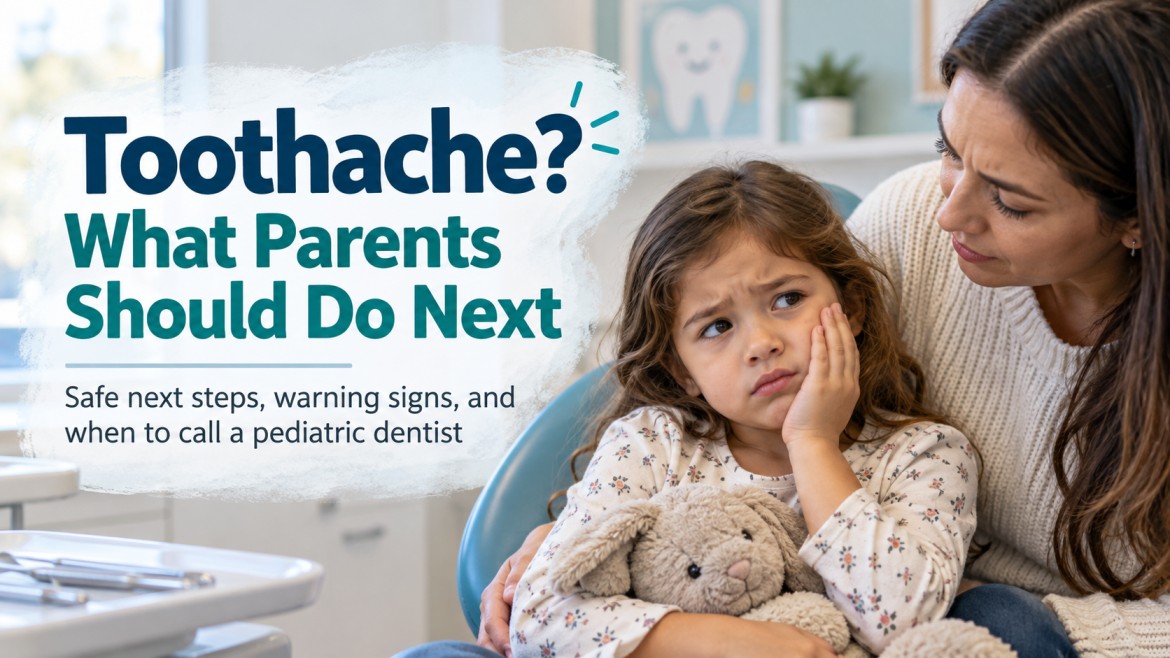
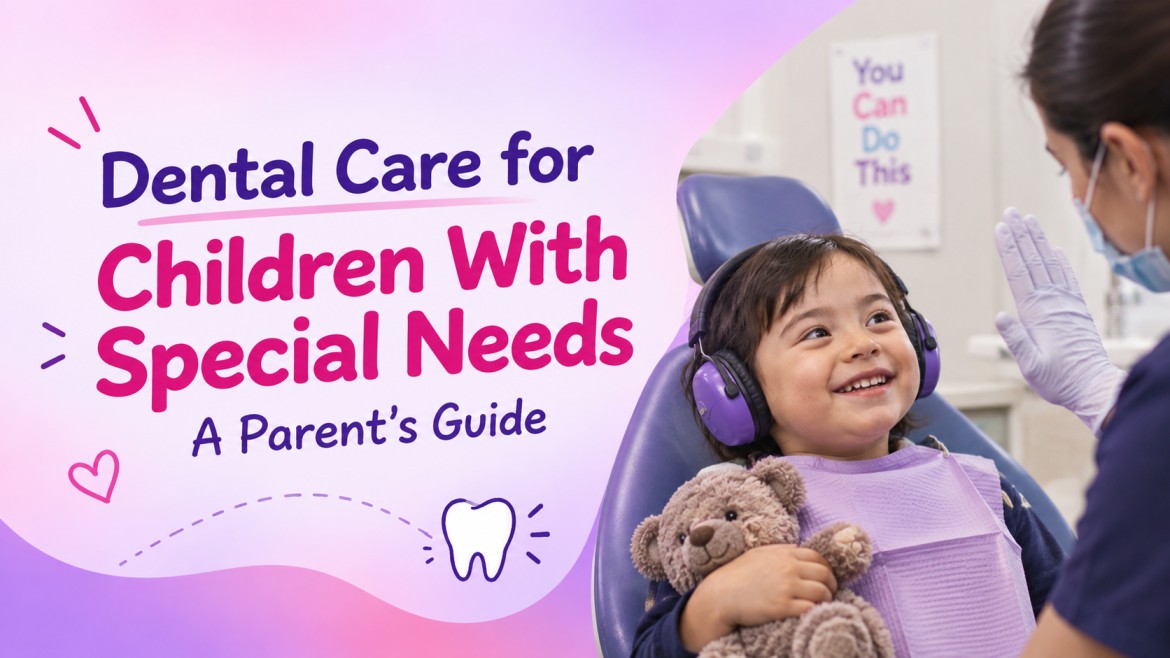
If your child is scared of the dentist, you are not dealing with a rare problem. Dental anxiety in children is common at every age. Preparation often makes the visit easier.
Three things usually help. Tell your child what will happen, in words that fit their age. Keep your own tone calm and ordinary. And let the dental office know your child is nervous before the visit, so the team can plan around it.
This guide walks through what to do in the days before, on the morning of, and during a hard appointment. It also covers when to call your dentist instead of waiting.
Start Here: 5 Ways to Help a Child Scared of the Dentist
If you only have a few minutes before the appointment, start with these.
- Keep your own voice calm and matter-of-fact. Children read adult worry quickly. Talk about the visit the way you would talk about a haircut.
- Describe what will happen instead of promising how it will feel. Say the dentist will count their teeth and explain each step. Avoid promises like "it won't hurt," which you cannot guarantee.
- Bring something comforting. A stuffed animal, a blanket, or headphones gives your child something familiar to hold on to.
- Tell the dental team your child is nervous. Mention it when you book and again at the front desk. Say what worried your child last time, if you know.
- Let progress happen in steps. A short visit that ends early still counts. Some children need more than one visit before they settle.
Why Is My Child Afraid of the Dentist?
Common Reasons Children Feel Scared
Most children are reacting to something specific. Common reasons are the unfamiliar room, the sounds, lying back in the chair, and having a stranger close to their face. Younger children often worry about being away from you.
Pain or discomfort can be part of it too. A child with a sore tooth or a sensitive gag reflex may be anxious for a practical reason. Ask which part they do not like. Children often name something concrete, such as the taste of the polish, and the team can work around it.
If your child reacts mainly to lights, textures, or noise, our guide to dental care for children with special needs and sensory sensitivities covers that in more detail.
When Fear Comes From a Previous Experience
Sometimes there is a clear starting point: a long appointment, an injection they did not expect, or a visit that happened while they were already in pain. If you know what happened, say so when you book, so the team can plan around it. If you cannot name a cause, that is common too.
How to Prepare a Nervous Child Before the Dentist
When to Tell Your Child About the Appointment
There is no single right answer, and you know your child best. As a rough guide:
- Toddlers and preschoolers: the night before or that morning. Long notice tends to create worry without helping them prepare.
- School-age children: two or three days ahead. That gives them time to ask questions.
- Teens: about a week, treated as a normal scheduling matter.
Adjust as needed. A very anxious child may do better with less warning. A child who hates surprises may want more.
What to Say (and What to Avoid)
The main principle is simple. Describe what will happen, but do not make promises about how it will feel.
Keep the conversation short. A couple of sentences, answer their questions, then move on to something else.
Practice a Dental Visit at Home
A little rehearsal helps some younger children. Count their teeth with a clean finger while they lie back on the sofa. Let them do the same to you or to a stuffed animal. Let them look in a mirror with a flashlight.
Thirty seconds a day for a few days is plenty. You are aiming for familiarity, not accuracy. Charts and countdowns can signal that something big is coming.
Tell the Dental Office About Your Child's Fears
This step is easy to skip, and it often makes the biggest difference.
When you call to book, you can simply say: "My daughter is seven, and she's very anxious about the dentist. She had a hard time at her last appointment. Can we talk about how to make this visit easier for her?"
Useful things to mention: what upset your child before, any sensory triggers, whether they have a comfort object, and any medical conditions or medications.
⬇ Download the Nervous Child Dental Visit Checklist (PDF)
A free one-page printable you can work through in the days before the appointment.
Want to talk it through first? Call our Lafayette office at (337) 500-1500, or send us a message. We are happy to discuss your child's anxiety before you book anything.
What to Do on the Day of the Appointment
Plan Around Sleep, Food and Your Child's Routine
Aim for an early slot if your child is young. Many young children cope better before naps and tiredness set in.
Feed your child normally beforehand. A hungry child has a shorter fuse, and an empty stomach makes some children feel worse in the chair.
One important exception: if nitrous oxide or oral sedation is planned, the office will give you specific eating and drinking instructions. Those instructions replace anything you read here. Follow them exactly, because they exist for safety reasons and the visit may be canceled if they are not.
Keep the car ride ordinary. Play your usual music and talk about your usual things. Coaching on the way in can sound like a warning.
What to Bring for Comfort
- A comfort object — a stuffed animal, a blanket, a small toy to hold
- Headphones or a device, if your child uses them for distraction
- A list of medications, allergies, and medical conditions
- Any notes about what upset your child at a previous visit
If you can, leave siblings at home. One upset child in the room is easier than two.
Helping Your Child Feel Safe in the Dental Chair
How Tell-Show-Do Works
Tell-show-do is one of the basic techniques in the American Academy of Pediatric Dentistry's behavior guidance recommendations. It works in three steps.
The team names the instrument in child-friendly words. They show how it works on a finger, a hand, or a stuffed animal. Then they use it. The aim is that nothing arrives without being introduced first.
The AAPD lists other basic approaches too, such as distraction, praise, and gradual exposure. It calls its own recommendations conditional, which means different approaches suit different children. No single technique works for every child.
Should Parents Stay in the Room?
This is an individual decision, and it is worth discussing with your dentist rather than assuming either way. Some children settle faster with a parent nearby. Others may do better when a parent waits outside. Your dentist can suggest what is likely to suit your child.
Practices also differ in their policies, so ask when you book. If being in the room matters a lot to you, say so early.
If you do stay, the most useful thing is usually to go quiet once the team starts. Two adults talking at once splits your child's attention. Sit where they can see you, hold a hand or a foot, and let the dentist be the voice they follow.
Giving Your Child a Sense of Control
Much of the distress in the chair comes from not knowing when things will stop. A pause signal fixes that.
Before the appointment starts, your child and the dentist agree on a sign — usually raising a hand — that means please stop for a moment. The key part is that the team actually pauses when it is used.
What if My Child Cries or Won't Open Their Mouth?
Crying is common at dental visits, especially in toddlers and preschoolers. It does not mean the visit has failed. It also should not be brushed aside — crying can signal pain or real discomfort, not only nerves, and a dentist may need to check for a sore tooth or a tender spot before going further.
A child who goes silent and stiff is easy to misread as cooperative. If you see that, mention it.
What Parents Can Do
- Stay calm and quiet. Your reaction sets the temperature in the room.
- Avoid bargaining, pleading, or counting down. It raises the pressure.
- Do not call it bad behavior. A frightened child is not misbehaving.
- Let the team lead. Stepping in at the first wobble can end a visit that was about to go fine.
- Tell the dentist if you think something hurts.
What the Dental Team May Try
Usually they slow down. That might mean going back to a step your child managed, showing an instrument again, changing the order, or trying a different distraction. Some children settle within a few minutes once the pace eases.
For a child who will not open their mouth, the team may count teeth on the outside of the cheek first, use a mirror only, or let your child hold the instrument. For very young children, a knee-to-knee position with you holding them allows a quick look.
If more is needed, the AAPD classes protective stabilization — holding a child still — as advanced behavior guidance, alongside sedation. It has specific clinical requirements, including an assessment of why it is needed, what the alternatives are, and informed consent from you beforehand. It is not something that should happen without a conversation first. If you have strong feelings about it, say so at the start of the visit.
When to Pause, Reschedule or Seek Urgent Care
Stopping is a legitimate option, not a failure. The AAPD framework lists delaying care as one of the alternatives a dentist should weigh. A short, calm ending often protects the next visit better than a forced finish.
Urgency changes the picture. A child with a painful tooth, swelling, an infection, or a tooth injury may need care that cannot simply wait, and the conversation shifts to how the treatment happens rather than whether. Facial swelling, trouble breathing or swallowing, a fever with dental pain, or a significant facial injury needs prompt attention — and breathing difficulty or serious trauma means emergency medical care. Dr. Leslie Jacobs Pediatric Dentistry also lists 24/7 availability for dental emergencies.
If your child's visits keep ending early, call us at (337) 500-1500. We can talk through what has been happening and what the options look like for your child.
What if Your Child Needs a Filling or Other Treatment?
How to Explain Treatment Without Creating Fear
Keep it short and accurate. You do not need to use words like drill, needle, or shot. You also should not promise there will not be any.
Something like this works for most children: "There's a soft spot on one tooth. The dentist is going to clean it out and fill it in so it stays strong. She'll tell you about everything before she does it."
Then let the team handle the details. A child who has already heard a scarier version at home arrives with that one in mind. You can ask the office how they prefer parents to describe it.
One practical note about numbing. Many children are more bothered by the numb feeling afterward than by the procedure itself. Tell them the lip and cheek will feel fat and strange for a while, and that it wears off. Watch them afterward, since a numb lip is easy to bite without noticing.
When Nitrous Oxide or Oral Sedation May Help
These are two different things.
Nitrous oxide is mixed with oxygen and breathed through a small nose mask. The AAPD treats it as pain and anxiety relief rather than deeper sedation. Your child stays awake, can talk and respond, and usually remembers the visit. It wears off quickly once the gas stops. The AAPD describes it as safe and effective when used appropriately, which is not the same as risk-free — nausea is the most common side effect, and some children are not suitable candidates.
Oral sedation is a different category. A medicine is given by mouth and the child becomes drowsy and much less aware. Sedation works on a sliding scale, and a child can become more deeply sedated than intended. That is why the AAPD and the American Academy of Pediatrics publish joint monitoring guidelines covering medical evaluation beforehand, fasting instructions, trained staff whose only job is monitoring, and recovery before a child goes home.
Two things to be clear about. Neither option is a cure for fear, and neither guarantees that a child will cooperate. And nobody can tell you from a web page whether your child is a candidate. That depends on their medical history, age, the treatment needed, and an in-person assessment.
Helping Children With Severe or Ongoing Dental Anxiety
Gradual Practice and Shorter Visits
For a very fearful child, the realistic plan is several small appointments rather than one big successful one.
Desensitization is one of the basic techniques in the AAPD's framework, and it means what it sounds like. A first visit might be walking in, meeting the team, and sitting in the chair. The next adds counting teeth. The one after that, a polish. Each step ends while your child is still coping.
Shorter visits often work better than long ones, even when the total chair time is the same.
Not every practice schedules these as separate appointments, so ask directly. A useful way to put it: "He's very anxious — could we start with a short visit and no treatment?"
Building Trust Over Time
Seeing the same team helps. A child who has to start over with a new face each visit never builds on the last one. When you book, it is worth asking whether you can request the same hygienist.
Planning is individual. What suits one anxious child will not suit another, so these conversations belong with your dentist.
How to Prevent Dental Fear Before It Starts
If you have a younger child who is not afraid yet, early visits are the best protection.
The AAPD recommends establishing a dental home by a child's first birthday, or within six months of the first tooth coming in. The American Academy of Pediatrics supports the same timing. The usual reason given is prevention. The second reason is behavioral: a child whose first visits involved nothing but being looked at and sent home has a set of ordinary memories to draw on.
It also helps to keep your own appointments sounding routine, and to praise what your child actually did rather than how they felt. You opened your mouth when she asked, giving them something they can repeat.
Frequently Asked Questions
Is it normal for a four-year-old to cry the whole visit?
It is common. Young children have limited ability to calm themselves in a strange place with someone near their face. What matters more is how they recover afterward and how the next visit goes. Tell the dentist if the crying seemed to be about pain.
Should I tell my child about a filling in advance?
For most children over about four, yes. A surprise procedure costs more trust than a day of nerves. Keep it short and factual, and tell them close to the appointment rather than a week ahead. For toddlers, same-day framing usually works better.
My child was fine before and is suddenly scared. Why?
Often the reason is simply age. An older child understands more, imagines more, and has heard more from other children. It can also follow a specific event, such as a longer appointment, a vaccination, or a tooth that hurt. Ask what they are worried about — children are usually more specific than adults expect.
How many visits does it take before a nervous child settles?
There is no set number, and it varies a lot. Some children are fine by the second visit. Others need several short ones before a full appointment works. Steady, predictable visits tend to help more than long gaps between them.
Can I give my child something to calm them before the appointment?
Do not give any medicine for anxiety unless your child's dentist or doctor has specifically advised it. Even over-the-counter products can interact with treatment or with sedation. Call the office and ask instead.
Will my child grow out of being scared of the dentist?
Many children do, especially when their visits stay short and uneventful. Some do not, and childhood dental fear that is never addressed can turn into avoidance in adulthood. The part you can influence is the pattern of experiences.
Gentle Pediatric Dentistry for Nervous Children in Lafayette, LA
Most of what helps a scared child is unglamorous: honest words pitched to their age, a calm morning, a team that explains each step, and patience across more than one visit.
Dr. Leslie Jacobs Pediatric Dentistry is a child-focused practice in Lafayette, led by Dr. Leslie Jacobs, a board-certified pediatric dentist. The office is built with children in mind, including Interactive Playzones, and the team includes staff fluent in English, Spanish, and Sign Language.
If your child is nervous about the dentist, tell us when you schedule. Knowing in advance lets us plan the visit around that instead of discovering it halfway through.
📞 Call (337) 500-1500
Request an appointment online →
113 Rue Fontaine, Lafayette, LA 70508 · Monday to Friday, 8 a.m. to 5 p.m. · Serving Lafayette and the surrounding Acadiana communities.
Clinical sources: American Academy of Pediatric Dentistry, Behavior Guidance for the Pediatric Dental Patient; AAPD, Use of Nitrous Oxide for Pediatric Dental Patients; AAPD and American Academy of Pediatrics, Monitoring and Management of Pediatric Patients Before, During, and After Sedation for Diagnostic and Therapeutic Procedures.