.png)

Your child has a dental appointment coming up, and the dentist just mentioned laughing gas. Now your mind is full of questions. What exactly is it? How long does nitrous oxide last? When will my child feel normal again? And most importantly, is it actually safe?
As a pediatric dentist in Lafayette, LA, I hear these questions from parents every single day, and that is completely okay. It means you are doing your job as a caring parent. So let me walk you through everything you need to know, in plain and simple language.
What Is Nitrous Oxide- And Why Do We Call It Laughing Gas?
Nitrous oxide is a colorless, odorless gas that is mixed with oxygen and gently delivered to your child through a small, soft nose mask. It is one of the mildest forms of dental sedation available, and it has been safely used in pediatric dentistry for decades.
We call it laughing gas because it gives kids a warm, relaxed, and sometimes giggly feeling. It does not put your child to sleep. They stay fully awake, can hear the dentist, and can respond to questions throughout the entire procedure.
The American Academy of Pediatric Dentistry (AAPD) considers nitrous oxide one of the safest sedation options for children. It works especially well for kids who feel anxious about dental visits, have a sensitive gag reflex, or struggle to sit still during longer procedures.
How Long Does Nitrous Oxide Last? Here Is the Clear Answer

This is the number one question parents ask, so let me give you a straight answer right away.
Nitrous oxide starts working in about 2 to 3 minutes. The effects last only as long as the gas is flowing, meaning it lasts for the duration of your child's dental procedure. Once the nose mask is removed, the gas begins clearing out of the system almost immediately. Most children feel completely back to normal within 5 to 10 minutes after the procedure is finished.
This is one of the biggest advantages of laughing gas over other types of sedation. There is no long wait for it to wear off, no groggy ride home, and no need to cancel the rest of the day.
How Quickly Does Nitrous Oxide Start Working?
Once your child puts on the nose mask and starts breathing in the gas, effects usually begin within 2 to 3 minutes. Your child will feel relaxed, a little tingly in the hands and feet, and possibly lightheaded or giggly. Some kids describe it as feeling like they are floating. This calming effect is exactly what we want; it helps children stay comfortable and cooperative during the dental work.
How Long Does the Effect Last During the Procedure?
The gas works continuously as long as your child is breathing through the nose mask. The dentist carefully controls the level of nitrous oxide throughout the entire appointment, adjusting it up or down based on how your child is doing. For most kids, a routine dental procedure takes anywhere from 30 to 60 minutes, and the gas is active the whole time.
How Long Does Nitrous Oxide Take to Wear Off After the Dentist?
This is where laughing gas truly stands out from other sedation options. As soon as the dental work is finished, the dentist removes the nitrous oxide and has your child breathe 100% pure oxygen for about 3 to 5 minutes. This flushes any remaining gas out of the body completely.
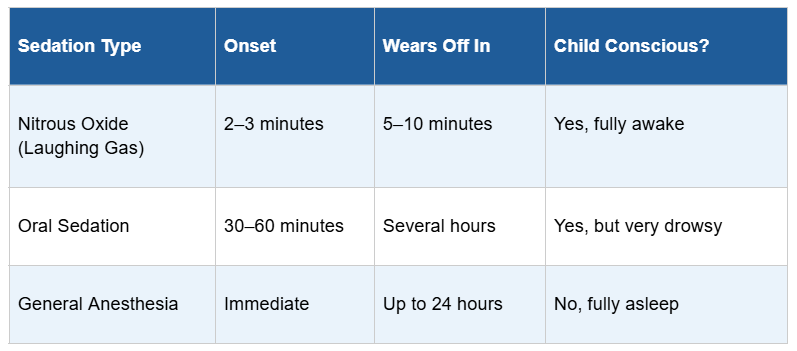
Within 5 to 10 minutes of the mask coming off, your child should feel fully normal again, no drowsiness, no confusion, and no lingering grogginess. Compare that to oral sedation, which can leave kids sleepy for several hours, or general anesthesia, which can take up to 24 hours to fully clear, and it is easy to see why so many parents prefer laughing gas for routine pediatric dental procedures.
Can My Child Go Back to School or Normal Activities the Same Day?
Yes, in most cases! Because the nitrous oxide wear-off time is so short, school-age children can typically return to school the same day after their appointment. Your child may occasionally feel slightly tired, but most kids bounce right back to their normal selves within minutes of leaving the dental chair.
What Will My Child Actually Feel During Nitrous Oxide?
Parents often want to know exactly what their child will experience so they can prepare them ahead of time. Here is what most kids describe:
• A warm or tingly feeling in the hands and feet
• Feeling relaxed, calm, and a little floaty
• Mild giggles or a sense of happiness, hence the nickname laughing gas
• Sounds may seem slightly far away or muffled
• A gentle heaviness in the arms and legs
Your child will not feel pain, will not lose consciousness, and will be able to hear and respond to the dentist the entire time. It is a gentle, non-scary experience, and many children actually look forward to it once they have had it a few times.
What Factors Affect How Long Nitrous Oxide Lasts in Your Child?
While the general timeline is 2 to 3 minutes to kick in and 5 to 10 minutes to wear off, a few things can influence the experience:
Age and size: Younger and smaller children usually need a lower concentration of gas.
Type and length of procedure: A longer procedure means the gas runs longer, but the wear-off time stays the same.
Anxiety level: A very anxious child may need a slightly higher concentration, which your dentist will carefully monitor and adjust.
Breathing pattern: Nitrous oxide only works when your child breathes through their nose. Mouth-breathers or children with nasal congestion may not get the full effect.
Medications: Always inform your dentist about any medications your child is taking, as some can interact with sedation.
Is Nitrous Oxide Safe for Babies and Young Children?
Yes, when administered by a trained pediatric dentist, laughing gas is considered very safe for children of all ages, including toddlers and young babies. Here is why parents can feel confident:
• It is endorsed by the American Academy of Pediatric Dentistry (AAPD)
• It is not addictive and has no long-term side effects
• Your child remains awake and responsive at all times
• The dentist monitors your child continuously throughout the procedure
• It wears off faster than any other form of pediatric dental sedation
One note for parents who are pregnant: You will be asked to wait in the waiting room during the procedure. That is purely for the mother's safety and has nothing to do with the gas being harmful to children.
Possible Side Effects- What Parents Should Watch For
Nitrous oxide side effects in children are uncommon, but they can happen. Here is what you might notice:
• Mild nausea or upset stomach, often caused by eating a heavy meal too close to the appointment
• A light headache shortly after the procedure
• Mild dizziness right after the mask is removed
• In rare cases, vomiting
These side effects are almost always short-lived and resolve quickly after the oxygen flush. If your child still feels unwell after getting home, give your dentist's office a call right away.
How to Prepare Your Child for a Nitrous Oxide Appointment
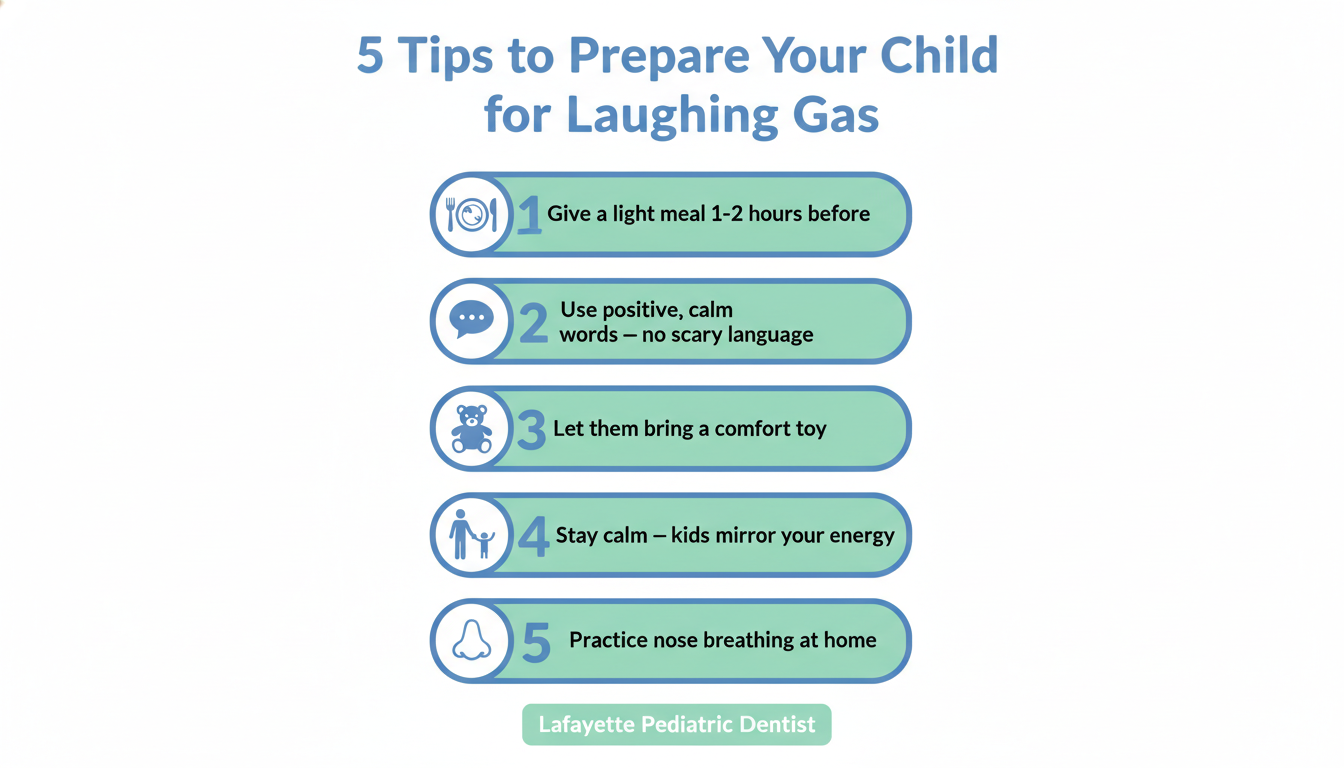
Give a light meal 1 to 2 hours before the appointment. A completely empty stomach can cause nausea, and a very full one can too. A small, light snack is the sweet spot.
Be honest but keep it positive. Try something like: "You are going to wear a tiny nose mask that helps you feel super relaxed and calm." Avoid using words like scary, needle, or pain.
Let them bring a comfort item. A small stuffed animal or favorite toy can go a long way for a nervous child.
Stay calm yourself. Children pick up on parental anxiety very quickly. If you feel worried, take a breath; your calm energy helps them feel safe.
Practice nose breathing at home. Since the gas only works when your child breathes through their nose, it can help to practice slow nose breaths together the night before the appointment.
Nitrous Oxide vs. Other Sedation Options for Kids
Wondering how laughing gas compares to other types of pediatric dental sedation? Here is a quick side-by-side look:
Frequently Asked Questions About Nitrous Oxide for Kids
Here are the questions parents ask us most often at our Lafayette pediatric dental office:
Q: How long does nitrous oxide last for kids?
A: Nitrous oxide starts working within 2 to 3 minutes, and its effects last for as long as the gas is being delivered through the nose mask. Once the mask is removed and the child breathes pure oxygen for 3 to 5 minutes, the gas is completely flushed out. Most children feel fully back to normal within 5 to 10 minutes.
Q: Will my child remember the dental procedure?
A: Maybe not in full detail. Nitrous oxide can cause mild, temporary amnesia, meaning your child may not remember everything that happened during the appointment. Many parents see this as a bonus; it helps prevent dental anxiety from building over time.
Q: Can my child eat before a nitrous oxide appointment?
A: Yes, but give them a light meal about 1 to 2 hours before the visit. A very full stomach can increase the chance of nausea. Avoid heavy or greasy foods right before the appointment.
Q: Is laughing gas safe for toddlers?
A: Yes. When administered by a trained and licensed pediatric dentist, nitrous oxide is safe for toddlers and young children. The AAPD recommends it as a first-line sedation option for pediatric dental patients across all age groups.
Q: What if my child breathes through their mouth?
A: Nitrous oxide only works when breathed in through the nose. If your child tends to be a mouth-breather or has nasal congestion on the day of the appointment, let your dentist know ahead of time. They may suggest rescheduling or switching to a different sedation approach.
Q: How is nitrous oxide different from general anesthesia?
A: They are very different. With nitrous oxide, your child stays fully awake, and the gas wears off within minutes. With general anesthesia, the child is completely unconscious, and recovery can take up to 24 hours. General anesthesia is typically reserved for more complex surgical procedures or children who cannot cooperate even with other forms of sedation.
Nitrous Oxide at Our Pediatric Dental Office in Lafayette, LA
At our pediatric dental practice in Lafayette, Louisiana, we understand that visiting the dentist can feel overwhelming for little ones and for their parents, too. That is why we offer nitrous oxide as a safe, gentle, and proven way to help kids feel calm and comfortable during their appointments.
Our team is specially trained in pediatric sedation, and we take the time to walk every parent through exactly what to expect before, during, and after the procedure. In most cases, parents are welcome to stay in the room with their child throughout the appointment.
If you have more questions about laughing gas for your child, or if you would like to schedule a consultation at our Lafayette office, we would love to hear from you. Give us a call or book an appointment online. We are here to make your child's dental experience a positive and comfortable one from start to finish.
Final Thoughts
So, how long does nitrous oxide last? The short answer: it works fast (2 to 3 minutes), lasts only as long as the procedure, and wears off almost immediately (within 5 to 10 minutes) once the mask comes off. It is safe, gentle, thoroughly researched, and one of the most parent-friendly sedation options available in pediatric dentistry today.
Now that you know exactly what to expect, you can walk into your child's next dental appointment feeling confident and informed. And remember, if you ever have concerns or questions, your pediatric dentist is always your best resource.

.jpg)
.jpg)


