.png)
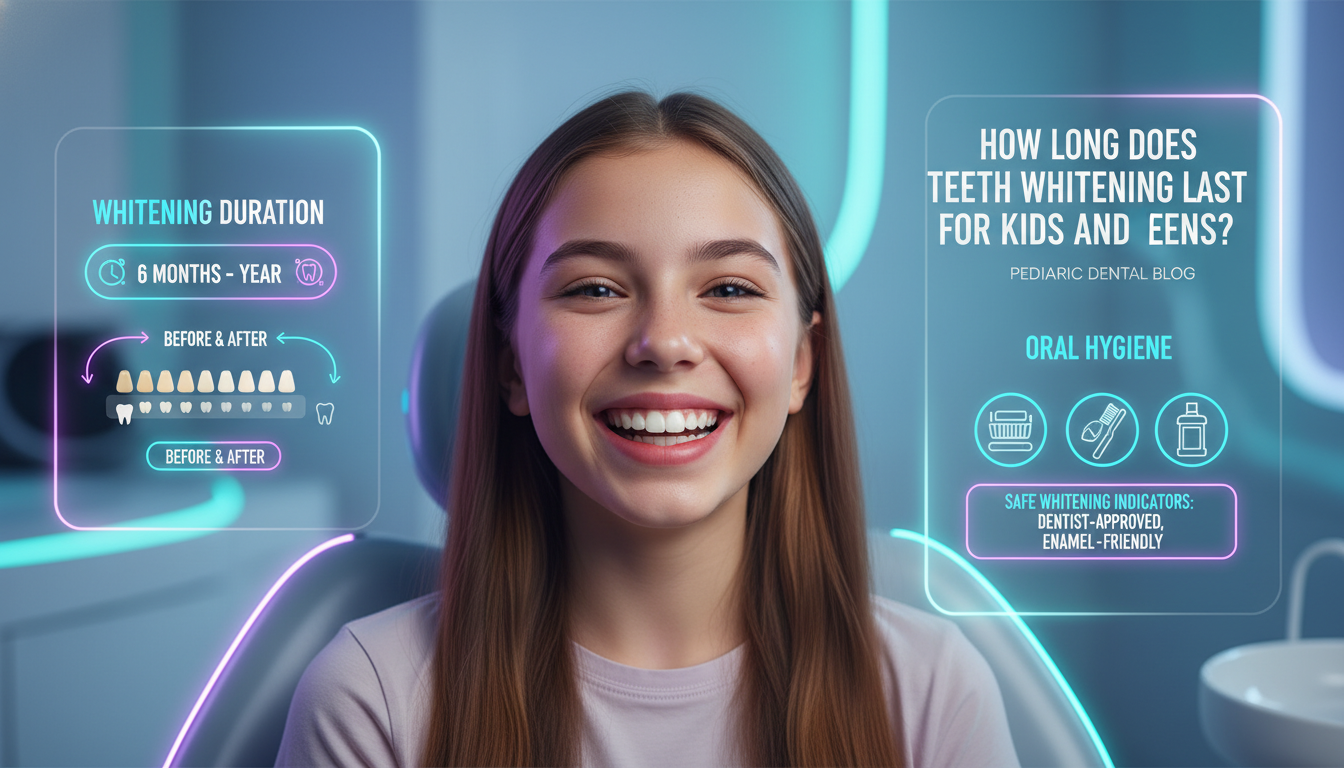
For most teens, professional teeth whitening results last between six months and two years, depending on treatment type, diet, and oral hygiene habits. Over-the-counter options tend to fade faster, often within one to three months. Younger kids are generally not candidates for whitening until all permanent teeth have fully erupted.
Key Takeaways
- Professional whitening supervised by a pediatric dentist typically lasts 6 months to 2 years; store-bought strips often fade within 4 to 8 weeks.
- Intrinsic stains (stains inside the tooth) do not respond to standard whitening treatments and may require alternative solutions like veneers or bonding.
- Teens with braces should wait until the brackets are removed before whitening to avoid uneven color results.
- Daily diet choices, especially coffee, soda, and dark berries, are the single biggest factor in how quickly whitening fades after treatment.
- A pediatric dentist should always evaluate a teen's tooth development and enamel health before any whitening treatment begins.
Why Do Kids' and Teens' Teeth Become Discolored?
Tooth discoloration in young people is more common than most parents expect. Before you consider any whitening treatment, it helps to understand why discoloration happens in the first place. Different causes respond very differently to whitening.
Are Food and Drink Stains Causing the Problem?
Chromogens are color-producing compounds found in foods and drinks like soda, sports drinks, tomato sauce, and dark berries. These compounds bond to tooth enamel and build up over time, creating yellowish or brownish surface stains.
For teens, this is usually the most common cause of discoloration. The good news is that surface stains from food and drink are the most responsive to whitening treatments.
Does Poor Oral Hygiene Lead to Tooth Staining?
Yes, consistently. When plaque builds up on tooth surfaces, it hardens into tartar and creates a yellow or brown film that brushing alone cannot remove. Teens who skip regular brushing or flossing are more likely to develop this kind of staining faster.
A professional dental cleaning should always come before any whitening treatment. Whitening gel works on enamel, not on plaque or tartar.
What Is Fluorosis, and Can Medication Cause Discoloration?
Fluorosis happens when a child is exposed to too much fluoride during the years when teeth are still forming, usually before age eight. It shows up as white streaks, brown spots, or pitting on the enamel surface.
Certain antibiotics, especially tetracycline, taken during tooth development, can cause deep grayish or brownish discoloration. According to the American Academy of Pediatric Dentistry (AAPD), medication-related discoloration is considered intrinsic, meaning it forms inside the tooth structure itself.
Can Braces and Retainers Cause Staining?
Orthodontic brackets create zones around each bracket where plaque is harder to remove. Over a full course of braces treatment, often 18 to 24 months, these areas can develop white spots or yellowing if oral hygiene slips.
This is one reason why pediatric dentists usually advise waiting until after braces are removed before doing any whitening. More on that in a later section.
Is Naturally Yellow Dentin the Cause?
Sometimes discoloration has nothing to do with diet or hygiene. Dentin, the layer of tooth beneath the enamel, is naturally yellow. As children grow, enamel can thin slightly, allowing more of the yellow dentin color to show through.
Genetics also plays a role. Some teens simply inherit thicker or more translucent enamel, making their teeth appear more yellow than their peers, regardless of how well they brush.
Understanding Extrinsic vs. Intrinsic Tooth Stains
Not all stains are created equal. This distinction matters more than almost anything else when predicting whether whitening will work and how long results will hold.
What Are Extrinsic Surface Stains?
Extrinsic stains: discoloration that sits on the outer surface of the enamel, caused by food, drinks, tobacco, or plaque buildup.
These stains are accessible to whitening agents. Hydrogen peroxide or carbamide peroxide, the active ingredients in most whitening treatments, penetrate the enamel surface and break apart the color compounds, causing the stain.
What Causes Intrinsic Tooth Discoloration?
Intrinsic stains: discoloration that originates within the dentin or deeper tooth structure, often caused by genetics, medication, fluorosis, or trauma.
Because these stains are inside the tooth, topical whitening products have a limited effect on them. Even professional-strength treatments may produce minimal improvement on true intrinsic staining.
Which Types of Stains Respond Best to Whitening?
Yellow extrinsic staining from food, drink, and mild plaque buildup responds best to whitening. According to the American Dental Association (ADA), yellow-toned staining consistently shows the most improvement across all whitening methods, while gray or brown tones from medication or trauma respond poorly.
When May Teeth Whitening Not Be Effective?
If your teen's discoloration is caused by fluorosis, tetracycline staining, or a physical injury to the tooth, whitening treatments are unlikely to produce satisfying results. In these cases, a pediatric dentist may recommend alternatives like composite bonding, porcelain veneers, or microabrasion, depending on severity and age.
How Long Does Teeth Whitening Last for Kids and Teens?
This is the question parents most often search for, and the answer depends heavily on which type of treatment is used and how well habits are maintained afterward.
What Is the Average Longevity of Professional Whitening Results?
Professional whitening performed or supervised by a dentist typically lasts between 12 and 24 months for teens who maintain good oral hygiene and limit staining foods. Some patients retain visible results even longer with periodic touch-ups.
The higher concentration of whitening agents used in professional settings produces bigger, longer-lasting changes to enamel pigmentation compared to consumer products.
How Long Do Over-the-Counter Whitening Results Typically Last?
Over-the-counter strips, gels, and whitening toothpastes use much lower concentrations of active whitening ingredients. Results are usually visible for 1 to 3 months, and in teens with heavy dietary staining habits, fading can begin within weeks.
These products can be useful for maintenance after professional treatment but are rarely sufficient as a standalone whitening solution for noticeable discoloration.
What Key Factors Affect Whitening Longevity?
Three factors consistently determine how long results last:
- Treatment strength: Higher peroxide concentrations produce longer-lasting results.
- Diet habits: Teens who regularly drink soda, sports drinks, or dark juices will see faster retention.
- Oral hygiene consistency: Twice-daily brushing and flossing prevent surface stains from accumulating and extend whitening results significantly.
What Determines How Long Whitening Results Last?
How Does the Type and Strength of Whitening Treatment Affect Results?
1. Professional In-Office Whitening Treatments
In-office whitening uses 15% to 43% hydrogen peroxide gel applied directly to the teeth, often combined with a light or laser to accelerate the process. A single session can produce significant whitening in under an hour.
Because the concentration is high and application is controlled, results from in-office treatments are the most durable available. For teens who are good candidates, this is often the most efficient path to longer-lasting whitening.
2. Dentist-Supervised Take-Home Whitening Trays
Custom trays made from dental impressions allow teens to whiten at home using a dentist-prescribed gel, typically 10% to 22% carbamide peroxide. Treatment usually runs 30 to 60 minutes per day over one to two weeks.
Results from custom trays are comparable to in-office treatments over time. The key advantage is the fit. Because the trays conform exactly to the patient's teeth, the gel reaches all surfaces evenly, reducing uneven whitening.
3. Over-the-Counter Whitening Strips and Kits
Store-bought strips typically contain 6% to 10% hydrogen peroxide, well below the concentration used in professional settings. They can reduce mild surface staining but are unlikely to produce dramatic results or long-lasting changes for teens with moderate to significant discoloration.
Does the Severity and Depth of Tooth Stains Matter?
Yes, significantly. Light extrinsic staining fades quickly with treatment and holds results well. Deep or long-standing staining takes more treatment sessions and may fade faster once treatment stops, because the underlying staining tendency is still present.
How Does Age and Enamel Development Affect Whitening Results?
Younger teens have larger pulp chambers and thinner enamel. This makes their teeth more sensitive to whitening agents and also means the whitening gel may penetrate more deeply, increasing both effectiveness and sensitivity risk.
As enamel matures, it becomes slightly more resistant to penetration. Older teens generally experience more predictable results with fewer sensitivity issues.
Do Daily Diet and Oral Hygiene Habits Affect How Long Results Last?
Think of whitening results the same way you would a freshly cleaned white shirt. How long it stays clean depends entirely on what happens after the cleaning. A teen who drinks three sodas a day and skips brushing at night will see whitening results disappear within weeks. A teen who limits staining foods and brushes twice daily can maintain results for well over a year.
Professional vs. At-Home Teeth Whitening for Teens
What Are the Differences in Whitening Ingredients and Strength?
Professional treatments use pharmaceutical-grade hydrogen peroxide or carbamide peroxide at concentrations 3 to 10 times higher than most consumer products. The delivery method, whether in-office application or custom-fitted trays, also ensures even contact with all tooth surfaces.
Consumer products use lower concentrations and one-size-fits-all applicators that can leave whitening gel in uneven contact with the teeth, leading to patchy results.
Why Do Professional Whitening Results Last Longer?
Professional whitening produces a bigger change in tooth color because the higher concentration agents reach further into the enamel structure. This means the initial whitening effect is more significant and takes longer to fade.
Additionally, a dentist can assess whether your teen's staining is extrinsic or intrinsic before treatment, ensuring the approach will actually work.
What Are the Risks of Whitening Without Dental Supervision?
Unsupervised whitening in teens carries real risks. Without a dental exam, there is no way to confirm that enamel is healthy enough for treatment, that there are no cavities that could become painful when exposed to whitening gel, or that the type of staining will actually respond to treatment.
Teens who whiten without dental guidance are also more likely to overuse products in pursuit of faster results, which increases sensitivity and enamel damage risk.
What Should Parents Know About Cost?
Professional in-office whitening for teens typically costs between $300 and $800, depending on the practice and the region. Custom take-home trays from a dentist usually run $150 to $400. Over-the-counter kits range from $20 to $60 but typically require repeated purchases to maintain any visible result.
When factoring in longevity and safety, the cost per month of professional whitening often competes favorably with the ongoing cost of replacing consumer products.
Is Teeth Whitening Safe for Kids and Teens?
Why Do Pediatric Dentists Often Wait Until Permanent Teeth Erupt?
Primary (baby) teeth have larger pulp chambers relative to their size, which makes them more sensitive to whitening agents. More practically, whitening baby teeth offers little long-term benefit because they will eventually be replaced by permanent teeth.
Most pediatric dentists wait until all or most permanent teeth have erupted before recommending any whitening treatment. This typically happens between ages 12 and 14 for most children.
What Are the Risks of Whitening Developing Teeth?
Teen enamel is less mineralized than adult enamel, making it more porous and more susceptible to chemical irritation. Whitening treatments applied too early or at too high a concentration, can cause transient sensitivity, gum irritation, or in extreme cases, demineralization of the enamel surface.
What About Tooth Sensitivity and Gum Irritation?
Tooth sensitivity is the most commonly reported side effect of whitening in teens. It usually appears during or shortly after treatment and resolves within 24 to 48 hours in most cases. Gum irritation typically results from whitening gel making contact with gum tissue, which is more likely with ill-fitting over-the-counter trays.
How Do Dentists Reduce Whitening Sensitivity?
Several approaches help manage sensitivity effectively:
- Using lower-concentration whitening agents over a longer treatment period
- Recommending desensitizing toothpaste containing potassium nitrate for two weeks before treatment
- Applying fluoride gel after whitening sessions to strengthen enamel
- Spacing treatment sessions to allow the teeth to recover between applications
When Might Teeth Whitening Not Be Recommended?
Whitening is generally not advised for teens with untreated cavities, gum disease, cracked teeth, hypersensitive enamel, or significant intrinsic staining that will not respond to the treatment. A thorough examination before starting any whitening plan is essential.
At What Age Is Teeth Whitening Usually Recommended?
What Should Parents Know About Whitening for Younger Teens?
Most pediatric dentists consider teens 14 and older to be reasonable candidates for supervised whitening, provided their permanent teeth have fully erupted and enamel development is sufficiently mature. Some dentists will consider whitening at 12 or 13 in specific cases, but this is done on an individual basis.
Why Is Whitening Rarely Recommended for Younger Children?
Children under 12 are almost always excluded from whitening recommendations because their permanent teeth are still erupting, enamel is still developing, and pulp chambers are proportionally large, increasing the risk. There is also little clinical data supporting the safety of whitening agents on developing dentition in this age group.
How Do Pediatric Dentists Determine Whitening Eligibility?
A pediatric dentist will evaluate several factors before recommending whitening:
- Whether all or most permanent teeth have erupted
- The current state of enamel mineralization
- The cause and depth of the staining
- Whether there are any untreated dental health issues
- The teen's ability to follow treatment instructions consistently
Common Professional Teeth Whitening Options for Teens
What Is LED and Light-Activated Whitening?
LED and light-activated whitening combines a peroxide whitening gel with a light source that accelerates the chemical reaction, producing faster results in a single appointment. This approach is commonly offered in dental offices and can produce several shades of improvement in one session.
For teens, this method requires careful attention to gum protection and treatment time to avoid overstimulating sensitive teeth.
What Are Custom Whitening Trays From a Pediatric Dentist?
Custom trays are fabricated from a precise mold of your teen's teeth. They hold whitening gel in even, consistent contact with every tooth surface and prevent gel from leaking onto the gums, which reduces irritation.
This is one of the most effective take-home options because the fit eliminates the uneven contact that causes patchy results with generic trays. Learn more about professional teeth whitening options specifically designed for younger patients.
Are There Lower-Concentration Options for Sensitive Teeth?
Yes. Dentists can prescribe whitening gels with lower peroxide concentrations, typically 10% carbamide peroxide, for teens with heightened sensitivity. The results develop more slowly but with fewer side effects. This is often the preferred approach for teens new to whitening or those with naturally thinner enamel.
Can Teeth Whitening Work With Braces or After Braces?
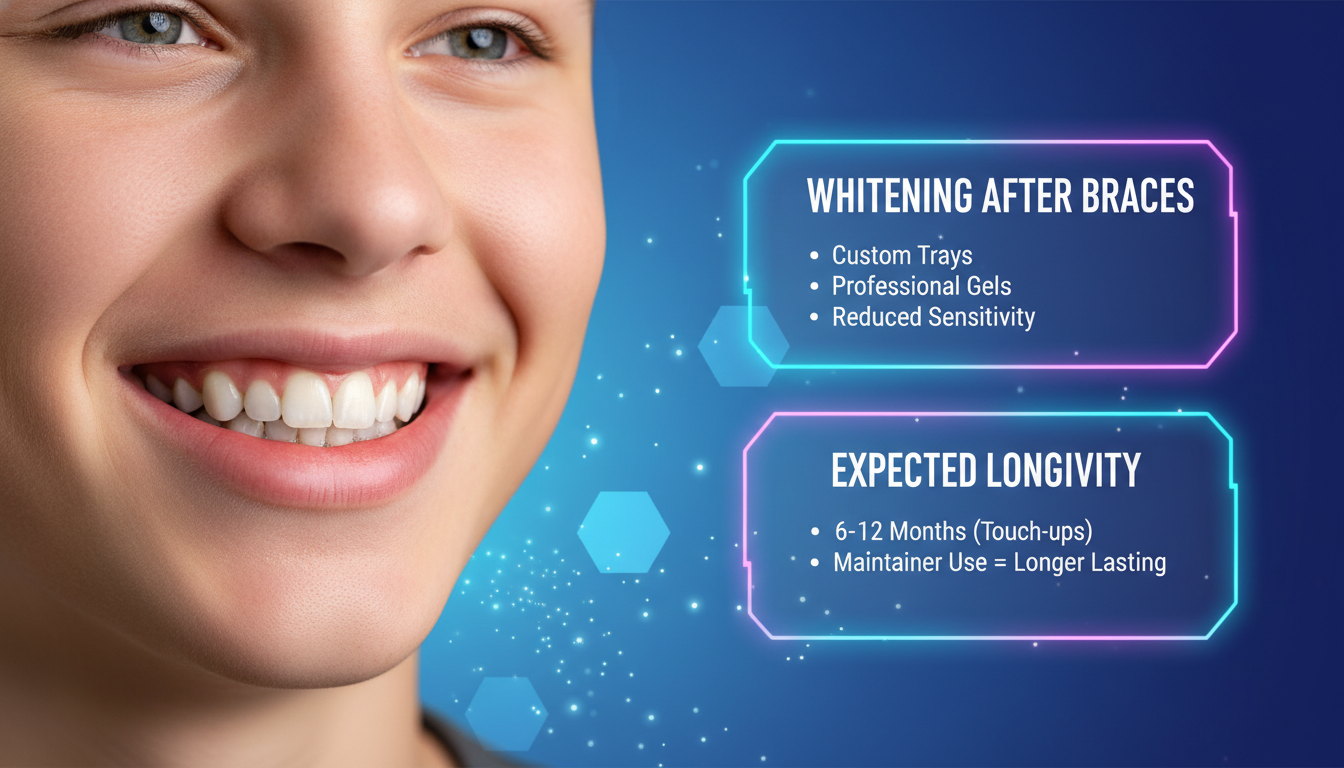
Why Is Whitening During Braces Treatment Usually Avoided?
Whitening gel cannot penetrate under orthodontic brackets. This means the tooth surface covered by the bracket stays its original color while the exposed enamel whitens around it. The result after brace removal is an uneven, patchy appearance with lighter areas surrounding darker spots where the brackets were.
When Is the Best Time to Whiten Teeth After Braces Removal?
Most dentists recommend waiting 6 to 8 weeks after braces removal before starting whitening. This allows the enamel to stabilize after the stress of orthodontic treatment and gives any areas of mild demineralization time to begin remineralizing naturally.
After braces, the teeth are fully accessible for the first time in months or years, making this an ideal window for a supervised whitening treatment.
What About Whitening After Invisalign or Clear Aligners?
Invisalign patients are in a unique position. Because clear aligners are removable, some dentists allow mild whitening to proceed during Invisalign treatment using the aligners themselves as whitening trays. This only works with low-concentration gels and must be coordinated carefully with the treating orthodontist.
After Invisalign, the same 6 to 8 week waiting period generally applies before pursuing a full whitening treatment.
How Are White Spots and Uneven Tooth Color Treated?
White spots after braces are areas of enamel demineralization. Standard whitening does not remove them and can sometimes make them more noticeable. Treatment options include microabrasion, remineralization therapy with high-fluoride products, or resin infiltration, a minimally invasive technique that fills the white spot area to blend it with the surrounding enamel.
Teeth Whitening Risks and Mistakes Teens Should Avoid
What Are the Risks of DIY Whitening Hacks on Social Media?
Social media platforms are full of whitening "hacks" that range from ineffective to genuinely harmful. Teens see peers using activated charcoal, lemon juice, hydrogen peroxide rinses, and baking soda paste in pursuit of faster results. The issue is that none of these methods are clinically tested for safety in developing dentition, and several actively damage enamel.
Why Should Teens Avoid Lemon Juice and Charcoal for Whitening?
Lemon juice is highly acidic and erodes enamel on contact. Using it repeatedly as a whitening agent causes irreversible enamel loss, which leads to permanent sensitivity and increased risk of cavities. Enamel does not grow back once it is lost.
Activated charcoal is abrasive. While it can remove light surface staining, regular use scratches enamel, creating microscopic grooves where bacteria and stain molecules collect more easily. The American Dental Association has not approved activated charcoal for dental use (ADA, 2023).
What Happens If Teens Overuse Whitening Strips?
Overusing whitening strips concentrates peroxide exposure beyond what the enamel can safely tolerate. The most common results are significant sensitivity, enamel thinning, and, in severe cases, translucency at the edges of the front teeth where enamel is thinnest. These changes can be permanent.
Why Is Whitening Without a Dental Exam Risky?
Whitening gel entering an untreated cavity can cause intense pain and internal tooth damage. Whitening over gum disease can worsen inflammation and tissue recession. Only a dental exam can confirm that the teeth and gums are healthy enough for treatment. Skipping this step is one of the most common and costly mistakes teens and parents make when pursuing at-home whitening without professional guidance.
Oral Hygiene Habits That Help Whitening Results Last Longer
How Should Teens Build a Consistent Brushing and Flossing Routine?
The single most effective thing a teen can do to extend whitening results is maintain a consistent twice-daily brushing routine with fluoride toothpaste, combined with daily flossing. Brushing within 30 minutes of consuming staining foods or drinks helps prevent color compounds from bonding to enamel.
A soft-bristled toothbrush and gentle circular brushing technique protect enamel while removing surface staining before it sets.
Which Foods and Drinks Cause Faster Restoring?
Staining accelerators include:
- Dark sodas and colas
- Coffee and tea
- Sports drinks and energy drinks
- Dark berries (blueberries, blackberries)
- Tomato-based sauces
- Soy sauce and balsamic vinegar
- Red juices (grape, cranberry, pomegranate)
Using a straw for staining beverages reduces direct contact with the front teeth and can meaningfully slow restaining between whitening treatments.
Should Teens Use Fluoride and Desensitizing Toothpaste?
After whitening, fluoride toothpaste strengthens enamel and reduces sensitivity. Desensitizing toothpastes containing potassium nitrate can be used before, during, and after whitening treatment to calm nerve response in the teeth. Dentists often recommend switching to a desensitizing formula for at least two weeks before starting a whitening course.
Why Do Routine Dental Cleanings Matter for Whitening Longevity?
Professional dental cleanings remove tartar and plaque buildup that brushing cannot address. For teens undergoing or maintaining whitening results, scheduling cleanings every six months helps preserve the brightness of treatment results and gives the dentist an opportunity to monitor enamel health over time.
When Whitening Results Fade: Can Teens Whiten Again?
How Often Can Teens Safely Repeat Whitening?
For professionally supervised whitening, most pediatric dentists recommend repeating treatment no more than once every 12 to 18 months, with periodic touch-up maintenance in between. More frequent whitening increases cumulative peroxide exposure and raises the risk of enamel thinning over time.
What Are the Signs a Teen May Need a Whitening Touch-Up?
Common signs include gradual yellowing that returns, especially noticeable in photos or under bright lighting, and a noticeable shift from the post-treatment shade. For teens on maintenance plans, their dentist will track shade changes at routine appointments and recommend touch-ups before significant fading occurs.
Why Can Over-Whitening Damage Enamel?
Hydrogen peroxide is a mild acid. Used correctly, it produces safe and effective whitening. Used too frequently or at too high a concentration without recovery periods, it disrupts the mineral content of enamel, creating sensitivity, translucency, and small cracks in the enamel surface. These changes weaken the tooth's natural defenses against bacteria and further staining.
When Should Parents Talk to a Pediatric Dentist About Teeth Whitening?
What Signs Suggest Your Teen May Be a Good Candidate?
Your teen may be a good candidate for whitening if:
- All or most permanent teeth have fully erupted
- Discoloration is primarily extrinsic (surface staining from food or drink)
- There are no untreated cavities or active gum problems
- The teen is 14 or older and motivated to follow aftercare instructions
- Staining is causing visible self-consciousness that affects confidence
What Happens During a Teeth Whitening Consultation?
A consultation at a pediatric dental practice typically includes a visual examination of the teeth and gums, a review of the teen's dental and medical history, a shade assessment to measure current tooth color, a discussion of treatment options and realistic expectations, and a recommendation on the most appropriate whitening approach for that patient's specific situation.
The visit also screens for any conditions, such as cavities or enamel weakness, that need to be addressed before whitening can safely begin.
What Questions Should Parents Ask Before Treatment?
- Is my teen's enamel fully developed and healthy enough for whitening?
- What concentration of whitening agents do you recommend for their age?
- How long do you expect results to last with their current diet and habits?
- What aftercare will they need to maintain results?
- Are there any alternative treatments better suited to the type of staining they have?
What Are the Alternatives to Whitening for Deep Tooth Discoloration?
For teens whose discoloration will not respond well to whitening, a pediatric dentist may discuss:
- Dental bonding: Composite resin applied to the tooth surface to mask discoloration
- Porcelain veneers: Thin ceramic shells bonded to the front of teeth, typically recommended for older teens or adults
- Microabrasion: Gentle removal of superficial enamel staining combined with remineralization
- Resin infiltration: A minimally invasive treatment for white spot lesions after braces
Professional Teeth Whitening for Teens in Lafayette, LA
What Are the Benefits of Pediatric Dentist-Supervised Whitening?
When whitening is done under the care of a pediatric dentist, every step of the process is tailored to the patient's age, enamel maturity, and staining type. This means fewer surprises, safer outcomes, and results that actually last.
Parents in the Lafayette area can schedule a consultation at Dr. Leslie Jacobs, a practice built around the specific dental health needs of children and teens, to find out whether whitening is the right step for their teen.
Are Personalized Whitening Plans Available for Teens?
Yes. Rather than a one-size-fits-all approach, a pediatric dentist creates a whitening plan based on your teen's tooth shade, the depth and type of staining, enamel health, sensitivity level, and lifestyle factors like diet and sports drink consumption. The result is a treatment plan designed to produce the best possible outcome for that specific patient, not a generic protocol.
How Does a Pediatric Dentist Protect Developing Teeth and Enamel During Treatment?
Pediatric dentists use lower whitening concentrations when appropriate, apply protective barriers to gum tissue before treatment, monitor treatment duration carefully, and follow up with fluoride application to remineralize enamel after sessions. For teens with a history of sensitivity, they adjust every aspect of the protocol to minimize discomfort while still delivering visible results.
When Should You Schedule a Teeth Whitening Consultation in Lafayette, LA?
The right time to schedule is before your teen tries any at-home whitening product. Starting with a professional evaluation ensures the teeth are healthy enough for treatment, the right approach is chosen from the start, and any issues that could complicate or undermine whitening results are addressed first.
Contact Dr. Leslie Jacobs in Lafayette, LA to schedule a whitening consultation and give your teen a smile they feel proud of, built on a foundation that protects their long-term dental health.
Conclusion
How long does teeth whitening last for kids and teens? With professional treatment and good habits, results can hold for 12 to 24 months or longer. Without the right oral hygiene routine and dietary awareness, even the best professional whitening can fade within a few months.
The most important step any parent can take is starting with a pediatric dentist who understands developing teeth. The right treatment plan, the right concentration, and the right aftercare make the difference between results that last and results that disappear.
If your teen is asking about whitening, take it as a signal. Schedule a consultation. Find out whether they are a good candidate, what type of staining they have, and which approach is safest for their stage of development. The answer might be whitening, or it might be something else entirely. Either way, you will know you made the choice with the full picture in front of you.
Ready to take the next step?
Contact Dr. Leslie Jacobs in Lafayette, LA, to book a professional whitening consultation for your teen. Call today to find out whether whitening is the right fit and how to protect your teen's smile for the long term.
Frequently Asked Questions
Can a 12-year-old get their teeth whitened?
Most pediatric dentists advise waiting until all permanent teeth have erupted, which typically happens between ages 12 and 14. At 12, some permanent teeth may still be erupting, making the timing premature for most patients. A dental exam is the only way to confirm whether a 12-year-old is developmentally ready for whitening.
How long does teeth whitening last with good oral hygiene?
With twice-daily brushing, daily flossing, and limited intake of staining foods and drinks, professional whitening results can last 18 to 24 months. Over-the-counter whitening under the same conditions typically holds for 1 to 3 months before noticeable fading begins.
Is whitening toothpaste safe for teens?
Whitening toothpastes are generally safe for teens because they use mild abrasives or very low concentrations of peroxide to remove light surface staining. They are not strong enough to change the underlying tooth color significantly but can help maintain results after professional whitening treatment.
What is the fastest way to whiten a teenager's teeth safely?
The fastest safe option is in-office professional whitening supervised by a pediatric dentist. A single session using a high-concentration gel with LED light activation can produce noticeable results in under an hour. At-home over-the-counter products take weeks and produce more modest results.
Can whitening make tooth sensitivity permanent?
Sensitivity from whitening is almost always temporary and resolves within 24 to 72 hours after treatment. However, repeated overuse of whitening products, especially without professional guidance, can cause enamel thinning that leads to chronic sensitivity. Following dentist-recommended intervals and concentrations is essential for preventing long-term sensitivity.
Do whitening results look different on teen teeth than adult teeth?
Teen enamel is often more porous and responds quickly to whitening agents, which means results can appear faster. However, because the pulp chamber is larger, sensitivity during treatment is more common. Results can be more dramatic but require careful management to avoid overstimulating developing teeth. A pediatric dentist adjusts treatment accordingly.
.jpg)
.jpg)


