.png)
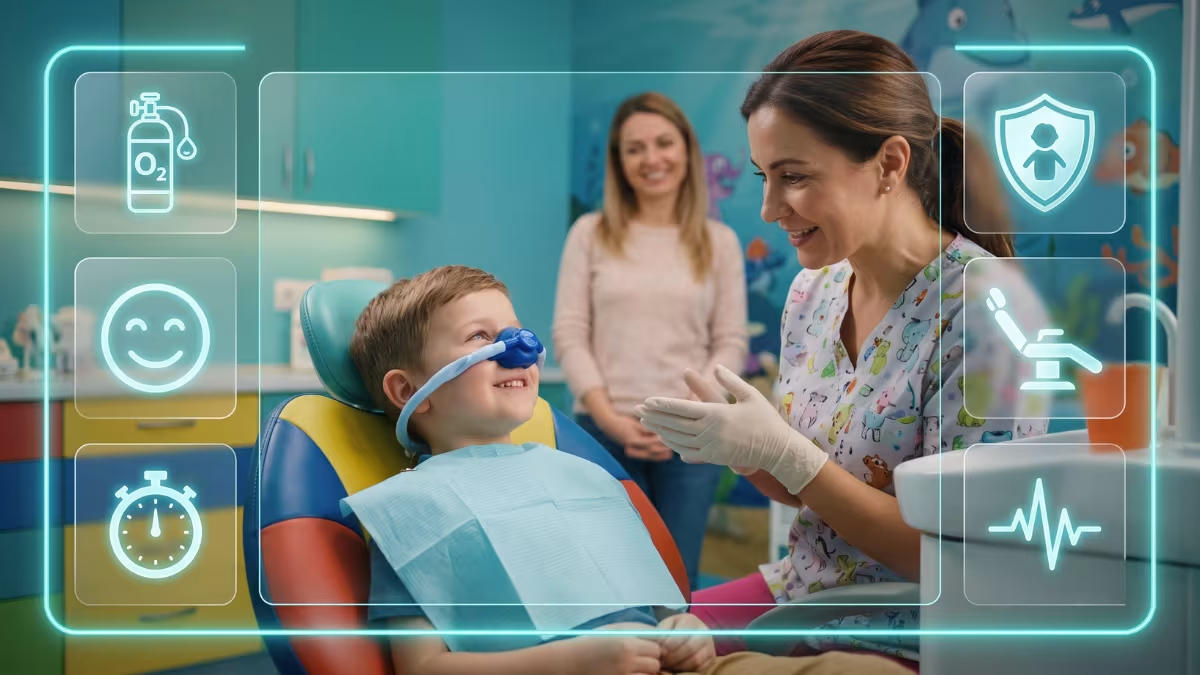
Nitrous oxide sedation, often called laughing gas, is a safe, mild sedation option pediatric dentists use to calm anxious children during dental treatment. Delivered through a small nasal mask, it works in minutes, wears off quickly, and lets your child stay awake and responsive throughout the visit.
Key Takeaways
- Nitrous oxide sedation wears off within minutes after your child breathes pure oxygen, so there is no lingering grogginess.
- The American Academy of Pediatric Dentistry (AAPD) classifies nitrous oxide as minimal sedation, the mildest level available.
- Your child stays awake and can respond to questions the entire time, unlike general anesthesia.
- Nitrous oxide costs less than oral or IV sedation, often adding $40 to $75 to a procedure.
- Not every child is a candidate. Nasal congestion, certain respiratory conditions, and some medical histories rule it out.
Watching your child cry or resist in the dental chair is hard for any parent. Many kids feel scared before a cleaning or filling even starts. This fear can delay needed treatment and make future visits harder. A calm, cooperative visit is possible with the right approach.
Pediatric dentists trained in sedation understand this fear firsthand. Dr. Leslie Jacobs Pediatric Dentistry uses proven, AAPD-backed techniques to ease anxiety safely. Nitrous oxide sedation is one of the gentlest tools available for this job.
This guide explains how nitrous oxide sedation works, who it helps most, and what to expect before, during, and after your child's appointment. You will also learn about cost, insurance, and how to choose the right sedation dentist in Lafayette, LA.
What Is Dental Sedation for Children?
Understanding Pediatric Dental Sedation and Its Levels
Dental sedation: medicine or gas used to help a child relax during treatment.
Pediatric dentists use sedation to manage fear, pain sensitivity, or difficulty sitting still. The AAPD groups sedation into four levels, based on how deeply a child is calmed.
- Minimal sedation keeps your child awake and responsive. Nitrous oxide falls into this category.
- Moderate sedation, often an oral medication, makes a child drowsy but still able to respond to touch.
- Deep sedation puts a child in a sleep-like state with limited response.
- General anesthesia makes a child fully unconscious, with no awareness of the procedure.
Each level exists for a reason. A dentist chooses the level based on your child's age, anxiety, medical history, and the procedure planned.
Where Nitrous Oxide Fits Among Pediatric Sedation Options
Nitrous oxide sits at the mildest end of the sedation scale. It calms without putting your child to sleep. This makes it different from oral sedatives, IV sedation, or general anesthesia, which affect consciousness more deeply.
As a result, nitrous oxide carries fewer risks and a faster recovery. Most children can eat, play, and return to school the same day. Many pediatric dentists reach for it first before considering stronger sedation methods.
What Is Nitrous Oxide Sedation (Laughing Gas)?
Definition, Origin of the Name, and How Conscious Sedation Works
Nitrous oxide sedation is a blend of nitrous oxide and oxygen gas that your child breathes through a small nasal mask. It produces a light, relaxed feeling within minutes.
The nickname 'laughing gas' comes from the mild euphoria and occasional giggling some patients experience. This effect was first noted in the early 1800s, when researchers observed people reacting playfully to the gas.
Nitrous oxide sedation is a form of conscious sedation. Conscious sedation: a state where a patient remains awake, breathes independently, and responds to verbal cues throughout treatment.
This means your child can still talk to the dentist, follow instructions, and answer simple questions during the appointment.
How Nitrous Oxide Differs From General Anesthesia
General anesthesia makes a child completely unconscious, with no memory of the procedure. Nitrous oxide sedation works differently.
Your child stays awake, aware, and able to breathe on their own the entire time. There is no need for an IV line, a breathing tube, or a hospital setting.
Recovery also looks different. General anesthesia often requires hours of monitoring and a groggy recovery period. Nitrous oxide effects clear within minutes, once your child breathes pure oxygen at the end of the visit.
How Nitrous Oxide Sedation Works
The Gas, the Nasal Hood, and the Role of Oxygen
A pediatric dentist delivers nitrous oxide through a small, flavored nasal mask called a nasal hood. This device fits comfortably over your child's nose.
The gas mixture typically starts around 30 to 50 percent nitrous oxide, blended with oxygen. The dentist adjusts this ratio throughout the visit based on your child's response.
Oxygen plays a critical safety role. The mask always delivers oxygen alongside nitrous oxide, which prevents any risk of oxygen deprivation. At the end of treatment, your child breathes 100 percent oxygen for several minutes to clear the gas from their system completely.
How It Affects Your Child's Body and Why Local Anesthetic Is Still Needed
Nitrous oxide affects the central nervous system, producing calm, mild euphoria, and reduced anxiety. Some children report tingling in their hands or feet, or a feeling of heaviness.
However, nitrous oxide alone does not numb pain. It is not a substitute for local anesthetic during procedures like fillings or extractions.
The pediatric dentist still applies a numbing gel and local anesthetic injection when treatment requires it. Nitrous oxide simply makes that process feel far less stressful for your child.
Onset Time and How Long Effects Last
Nitrous oxide sedation works fast. Most children feel the calming effect within two to three minutes of breathing the gas.
The effects last only as long as the mask stays on. Once the dentist switches your child back to pure oxygen, the gas clears from the bloodstream within about five minutes.
This quick onset and quick recovery make nitrous oxide one of the most predictable sedation methods available for children.
Benefits of Nitrous Oxide Sedation for Children
Comfort and Anxiety Relief
Nitrous oxide sedation offers real comfort for anxious children. It reduces fear, eases a strong gag reflex, and helps kids sit still through longer procedures.
Many children who once dreaded dental visits become noticeably calmer and more cooperative with nitrous oxide. This shift can make future visits easier too, since a positive experience builds trust.
Have you ever wondered why some kids relax almost instantly once the mask goes on? The scent-flavored mask itself, paired with the calming gas, helps distract young patients from the sounds and sensations of treatment.
Flexibility and Fast Recovery
Dentists can adjust nitrous oxide levels in real time, increasing or decreasing the dose as needed. This flexibility helps fine-tune comfort throughout the appointment.
Recovery is fast and gentle. Most children feel completely normal within minutes of the mask coming off. There is no grogginess, no IV site to manage, and no extended recovery room stay.
Nitrous oxide is also well tolerated by most healthy children, with a strong safety record spanning decades of pediatric use.
Is Nitrous Oxide Right for Your Child?
Signs Your Child May Benefit
Some children respond especially well to nitrous oxide sedation. Signs your child may benefit include:
- Noticeable dental anxiety or fear of the dentist's chair
- A strong gag reflex during cleanings or X-rays
- Difficulty sitting still for longer procedures like fillings
- Mild sensory sensitivity to sounds, lights, or dental tools
- A history of resisting treatment despite gentle encouragement
If several of these apply to your child, nitrous oxide sedation is worth discussing with your pediatric dentist.
Children With Special Healthcare Needs
Children with certain developmental or sensory conditions sometimes benefit from nitrous oxide sedation. The predictable, calming effect can reduce sensory overload during treatment.
That said, every child's needs differ. A pediatric dentist trained in treating special healthcare needs evaluates each child individually. This includes reviewing medical history, communication style, and comfort with the nasal mask before recommending sedation.
When Another Sedation Method May Be a Better Choice
Nitrous oxide is not the right fit for every child or every procedure. Very young children, kids who cannot breathe through their nose, or those needing extensive surgical work may need a different approach.
In these cases, a pediatric dentist may recommend oral sedation, IV sedation, or general anesthesia instead. A later section of this guide compares these options in more detail.
Common Uses of Nitrous Oxide Sedation in Pediatric Dentistry
Routine and Preventive Visits
Nitrous oxide sedation helps during routine cleanings and checkups, especially for children with mild to moderate anxiety. It keeps preventive visits calm, which supports better long-term oral health habits.
Regular dental visits, made easier through mild sedation, help catch cavities early. According to the American Academy of Pediatric Dentistry, early and consistent dental visits reduce the risk of serious decay later in childhood (Source: AAPD, 2024).
Restorative and Surgical Procedures
Nitrous oxide also supports more involved treatments. Common procedures include:
- Cavity fillings
- Pulpotomies, sometimes called baby root canals
- Stainless steel or white crowns
- Simple tooth extractions
For these procedures, nitrous oxide works alongside local anesthetic. The gas manages anxiety and discomfort, while the numbing medication blocks pain directly at the treatment site.
When Nitrous Oxide Should Be Avoided
Respiratory and Nasal Conditions
Since nitrous oxide is inhaled through the nose, any condition that blocks nasal breathing can interfere with its effectiveness. This includes:
- Nasal congestion from a cold or allergies
- Chronic sinus conditions
- Certain asthma cases, depending on severity
- Other respiratory conditions that affect airflow
A pediatric dentist will usually reschedule sedation appointments if your child has active congestion on the day of treatment.
Ear Conditions and Other Medical Considerations
Nitrous oxide can affect pressure in enclosed spaces within the body, including the middle ear. Children with recent ear surgery or certain ear infections may need to avoid it temporarily.
Other considerations include specific metabolic conditions and certain medication interactions. Always share your child's full medical history with the dental team before any sedation appointment.
How to Prepare Your Child for Nitrous Oxide Sedation
Medical History and Pre-Appointment Guidelines
Before sedation, the dental team reviews your child's full medical history, including current medications and any past reactions to sedation.
Most pediatric dental practices allow a light meal before nitrous oxide sedation, unlike deeper sedation methods that require fasting. Dentists generally recommend avoiding heavy or greasy meals right before the appointment, since this can increase the chance of nausea.
Helping Your Child Feel Ready
Simple preparation at home makes a real difference. Explain the visit in age-appropriate, positive language. Avoid words like 'shot' or 'pain,' which can increase anxiety.
Many parents find it helpful to describe the nasal mask as 'sleepy air' or a 'space mask' that helps them feel calm. Practicing deep nose breathing at home can also help your child adjust faster once the mask goes on.
What Happens During the Appointment
Before and During Treatment
On arrival, the dental team places the flavored nasal hood over your child's nose and starts with pure oxygen. Nitrous oxide is then introduced gradually.
Your child stays seated in the dental chair the entire time, fully awake. The dental team talks with your child throughout, checking in regularly and adjusting the gas level as needed for comfort.
Monitoring and Post-Treatment Oxygen
Throughout the procedure, the dental team monitors your child's breathing, color, and responsiveness closely. Nitrous oxide has a strong safety record, but careful monitoring remains standard practice.
After treatment finishes, your child breathes 100 percent oxygen for three to five minutes. This step clears any remaining nitrous oxide from their system before they leave the chair.
Recovery After Nitrous Oxide Sedation
Recovery Timeline and Returning to Normal Activities
Recovery from nitrous oxide sedation is fast. Most children feel completely normal within minutes of the oxygen flush at the end of treatment.
There is generally no restriction on eating or drinking afterward, though the dental team may suggest starting with something light if numbing medication was also used. Most kids return to school, sports, or normal play the same day.
When to Contact Your Pediatric Dentist
Mild, short-lived side effects sometimes occur, including brief nausea or lightheadedness. These usually resolve within minutes.
Contact your pediatric dentist if your child experiences ongoing vomiting, unusual drowsiness lasting more than an hour, or any symptom that feels out of the ordinary after the visit.
Risks, Side Effects, and Safety
Common and Rare Side Effects
Nitrous oxide sedation has one of the strongest safety records in pediatric dentistry. Temporary side effects can include mild nausea, headache, or a brief feeling of grogginess.
Serious complications are rare. Research published by the National Institutes of Health points to a low overall complication rate when nitrous oxide is administered by trained providers with proper monitoring (Source: NIH, 2023).
Long-term safety data also supports its continued use, with decades of documented pediatric application.
How Pediatric Dentists Ensure Safety
Pediatric dentists follow strict AAPD guidelines for nitrous oxide administration. This includes continuous visual monitoring, proper gas-to-oxygen ratios, and required post-treatment oxygen flushing.
Many practices also use pulse oximetry, a small finger sensor that tracks oxygen levels and heart rate during sedation. Dentists and staff who administer nitrous oxide complete specific sedation training and certification, renewed on a regular schedule.
Nitrous Oxide vs. Other Pediatric Sedation Options
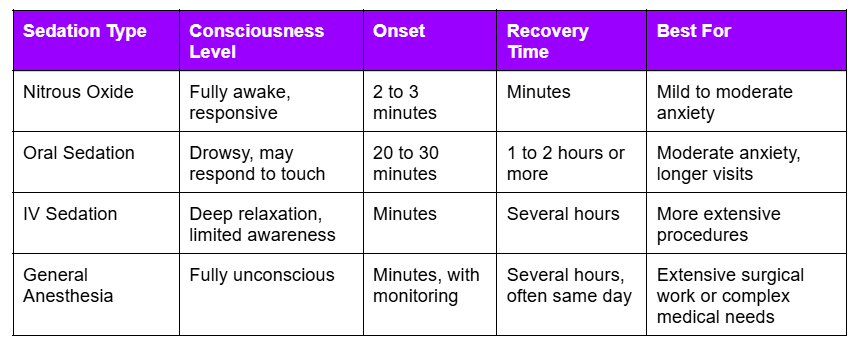
Comparing Nitrous Oxide, Oral Sedation, IV Sedation, and General Anesthesia
Every sedation method balances comfort, depth, and recovery time differently. The table below compares the four most common options in pediatric dentistry.
Which Option Is Right for Your Child?
The right sedation method depends on your child's anxiety level, medical history, and the procedure planned. Nitrous oxide works well for mild to moderate anxiety and shorter procedures.
More complex or lengthy treatments, or children with significant medical needs, may require oral sedation, IV sedation, or general anesthesia instead. Your pediatric dentist will walk through these options and recommend the safest, most comfortable fit.
Cost of Nitrous Oxide Sedation for Children
Average Cost and What Affects It
Nitrous oxide sedation typically adds $40 to $75 to the cost of a dental visit, though prices vary by location and practice.
Factors that affect cost include the length of the appointment, the complexity of the procedure, and regional pricing differences. Compared to oral sedation, IV sedation, or general anesthesia, nitrous oxide remains the most affordable sedation option available.
Insurance Coverage
Many dental insurance plans partially cover nitrous oxide sedation, especially when a dentist documents medical necessity, such as high anxiety or a strong gag reflex.
Coverage varies significantly between plans. Some insurers cover nitrous oxide fully for children under a certain age, while others treat it as an out-of-pocket add-on. Contact your insurance provider directly, or ask the front desk team to verify your specific benefits before the appointment.
Choosing a Pediatric Sedation Dentist in Lafayette, LA
What to Look for in a Pediatric Sedation Dentist
Choosing the right provider matters as much as choosing the right sedation method. Look for these qualities:
- Board certification in pediatric dentistry, not just general dentistry
- Specific training and continuing education in sedation techniques
- A practice equipped with pulse oximetry and monitoring equipment
- Positive reviews from other Lafayette-area parents
Good questions to ask during a consultation include how many sedation procedures the dentist performs each year, and how the team handles unexpected reactions during treatment.
Insurance, Financing, and Payment Options
Ask about accepted insurance plans, in-network status, and available payment plans before scheduling. Many pediatric dental practices, including Dr. Leslie Jacobs Pediatric Dentistry, offer flexible financing to make sedation visits more accessible for Lafayette families.
To learn more about the sedation services offered locally, visit the nitrous oxide sedation page at Make Your Kids Smile. You can also explore the full range of pediatric services on the
Make Your Kids Smile homepage to see how the practice supports anxious young patients.
Common Myths About Laughing Gas for Kids
Myth vs. Fact
Myth: Nitrous oxide puts children to sleep.
Fact: Your child stays fully awake and responsive the entire time.
Myth: Nitrous oxide is addictive or unsafe for regular use.
Fact: At dental doses, with proper monitoring, nitrous oxide carries a strong, decades-long safety record.
Myth: Recovery takes hours, like general anesthesia.
Fact: Effects clear within minutes once your child breathes pure oxygen.
Myth: Nitrous oxide replaces the need for numbing medication.
Fact: It reduces anxiety, but local anesthetic is still needed for pain control during procedures.
Conclusion
Nitrous oxide sedation gives anxious children a gentle, effective way to get through dental treatment. It works quickly, wears off just as fast, and keeps your child awake and comfortable throughout. For many families, it turns a stressful visit into a manageable one.
Every child is different, and the right sedation choice depends on their specific needs. At Dr. Leslie Jacobs Pediatric Dentistry, our team evaluates each child individually before recommending nitrous oxide or another sedation option. Safety and comfort guide every decision we make.
If your child struggles with dental anxiety, we can help. Contact Dr. Leslie Jacobs Pediatric Dentistry in Lafayette today to schedule a consultation and learn whether nitrous oxide sedation is right for your child.
Frequently Asked Questions
Is nitrous oxide sedation safe for young children?
Yes. Nitrous oxide sedation has a strong, decades-long safety record in pediatric dentistry. Trained dentists monitor breathing and oxygen levels throughout treatment, and children stay fully awake and responsive. Serious complications are rare when the gas is administered following AAPD guidelines by a trained provider.
How long does laughing gas take to wear off?
Nitrous oxide effects clear quickly. Once your child breathes pure oxygen for a few minutes after treatment, the gas leaves the bloodstream almost completely. Most children feel back to normal within minutes and can resume regular activities the same day, including returning to school.
Can my child eat before a nitrous oxide appointment?
In most cases, yes. Unlike deeper sedation methods, nitrous oxide does not require fasting. Dentists typically recommend avoiding heavy or greasy meals right before the visit to reduce the chance of mild nausea. Always follow your specific pediatric dentist's pre-appointment instructions.
Does nitrous oxide sedation hurt or numb pain?
No, nitrous oxide does not numb pain on its own. It calms anxiety and reduces discomfort perception, but local anesthetic is still used for procedures like fillings or extractions. The gas simply makes the overall experience feel far less stressful for your child.
How much does nitrous oxide sedation cost?
Nitrous oxide sedation typically adds $40 to $75 to a dental visit, making it the most affordable sedation option. Many dental insurance plans partially cover it, especially with documented anxiety or a strong gag reflex. Contact your provider or the dental office to confirm your exact coverage.
What if my child has a cold on appointment day?
Nasal congestion blocks nitrous oxide from working properly, since your child breathes it through the nose. Most pediatric dentists will reschedule sedation appointments if your child has active congestion, a cold, or a stuffy nose on the day of treatment.

.jpg)
.jpg)


