.png)
Preventing dental injuries in children starts with understanding where accidents happen most, which protective gear works, and how to respond in the first critical minutes after an injury. Most dental trauma in kids is preventable with the right habits, equipment, and awareness at home, school, and on the field.
Key Takeaways
- A knocked-out permanent tooth can be saved if you act within 30 to 60 minutes. Knowing what to do right now could make the difference.
- Store-bought mouthguards reduce injury risk, but custom-fitted mouthguards from a pediatric dentist offer significantly better protection for young athletes.
- Baby tooth injuries are not minor. They can affect the permanent tooth developing underneath and need professional evaluation.
- Falls inside the home are one of the leading causes of dental trauma in toddlers. Simple childproofing steps can prevent most of them.
- Routine pediatric dental visits strengthen teeth with fluoride and sealants, both of which lower the risk of fractures and decay-related injuries.
What Are the Most Common Dental Injuries in Children?
Dental injuries happen more often than most parents expect. According to the American Academy of Pediatric Dentistry, traumatic dental injuries affect up to 33% of children in their primary (baby) teeth and about 22% in their permanent teeth. These numbers make dental trauma one of the most common childhood health concerns, right alongside broken bones and cuts requiring stitches.
Knowing what types of injuries occur most frequently helps you recognize them quickly and respond correctly.
Chipped and Fractured Teeth
A chipped tooth is the most common dental injury in children. It happens when a child falls and hits their mouth on a hard surface, collides with another child during play, or bites down on something too hard.
Chips range from minor enamel cracks to deep fractures that expose the inner pulp of the tooth. A small chip with no pain may seem harmless, but even minor fractures can allow bacteria to enter and cause infection over time. Any visible chip deserves a dental evaluation.
Knocked-Out Permanent Teeth
A completely knocked-out tooth, called an avulsion in dental terms, is one of the most serious injuries a child can experience. Time is everything here. The longer the tooth stays out of the socket, the lower the chance of successful reimplantation.
This type of injury most often occurs during contact sports, bicycle accidents, or high-impact falls. Quick, calm action by a parent or caregiver in the first few minutes after the injury can determine whether the tooth is saved or lost permanently.
Loose or Displaced Teeth
Sometimes a tooth does not come out completely but shifts position, pushing inward, outward, or to the side. This is called tooth luxation. The tooth may feel loose, look crooked, or cause immediate pain when touched.
Displaced teeth need professional care within a few hours. A pediatric dentist can reposition and stabilize the tooth before the supporting ligament sustains permanent damage.
Soft Tissue Injuries to the Lips and Gums
Cuts, tears, and bruising to the lips, cheeks, tongue, and gums often accompany dental trauma. These soft tissue injuries bleed a lot, which makes them look more serious than they sometimes are. However, a deep cut or one that does not stop bleeding after 10 to 15 minutes of direct pressure needs medical attention.
Gum injuries near the base of a tooth also need evaluation because they can affect the tooth's attachment structure even when the tooth itself looks fine.
Jaw and Facial Trauma
Severe falls or high-impact sports collisions can cause jaw fractures or temporomandibular joint (TMJ) injuries. Signs include difficulty opening or closing the mouth, uneven bite, swelling along the jawline, or visible deformity.
Jaw trauma always warrants an emergency room visit or urgent call to a pediatric dentist. These injuries are less common, but when they occur, prompt treatment prevents long-term bite problems and chronic pain.
Why Are Children More Vulnerable to Dental Injuries?
Children's teeth and jaw structures are still developing, which makes them more susceptible to trauma than adult teeth. Their facial bones absorb impact differently, their motor coordination is still maturing, and their risk-taking behavior naturally peaks during childhood. All of these factors combine to make dental injuries a predictable part of growing up, though not an unavoidable one.
Falls and Playground Accidents
Falls are the leading cause of dental injury in young children, particularly those under age 6. Toddlers and preschoolers fall frequently because their heads are proportionally heavier than the rest of their bodies, making balance harder to maintain. A simple trip over a toy or a tumble off a low step can send a child's mouth directly into the floor or furniture edge.
Playground equipment adds another layer of risk. Slides, monkey bars, and climbing structures all create scenarios where a child can fall several feet onto hard ground or equipment edges.
Contact Sports and Recreational Activities
Older children and teenagers face a different set of risks. Sports like basketball, soccer, baseball, gymnastics, and martial arts account for a significant portion of dental injuries in school-age children. According to the National Youth Sports Safety Foundation, athletes who do not wear mouthguards are 60 times more likely to suffer dental trauma.
This statistic alone makes mouthguard use one of the single most impactful prevention steps any parent can take for an athletic child.
Unsafe Habits That Increase Dental Trauma Risk
Certain everyday habits increase a child's risk of dental injury without any accident involved. Opening packages with teeth, biting on pencils, chewing ice, and using teeth as tools all stress and weaken enamel over time.
Children who suck their thumbs or use a pacifier beyond age 3 may develop protruding front teeth, which are statistically more likely to suffer trauma during a fall because they extend beyond the natural protection of the lips.
How Weak Enamel and Tooth Decay Increase Injury Risk
A tooth weakened by decay fractures more easily under impact than a healthy tooth. Cavities create structural weak points in enamel, meaning even a minor bump can cause a significant break in a tooth that was already compromised.
This is why preventing dental injuries is not just about protective gear and supervision. It is also about maintaining strong, healthy teeth through good oral hygiene and regular professional care.
How Can You Prevent Dental Injuries During Sports and Physical Activities?
Sports-related dental injuries are among the most preventable of all childhood dental traumas. With the right protective equipment and awareness of which activities carry the highest risk, most of these injuries simply do not have to happen.
Why Mouthguards Matter for Young Athletes
A mouthguard works by creating a cushioned barrier between the upper and lower teeth and between the teeth and lips. It absorbs and distributes the force of an impact before it reaches the tooth roots and jawbone.
Mouthguards protect against chipped teeth, knocked-out teeth, jaw fractures, and even concussions in some cases. Every child who plays a contact sport or participates in high-impact recreation should wear one, full stop.
Custom vs. Store-Bought Mouthguards: Which Should You Choose?
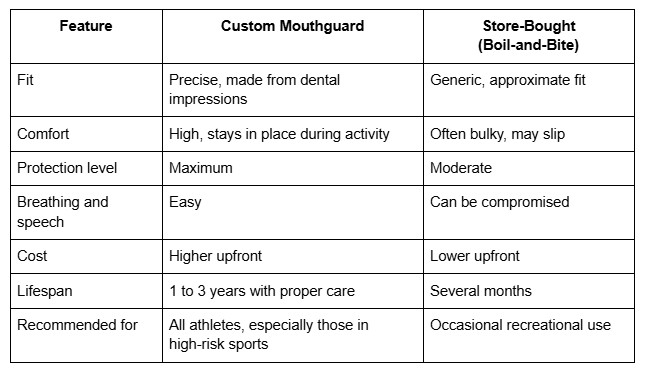
Custom mouthguards made by a pediatric dentist offer superior protection and comfort. Children are also more likely to actually wear them because they fit well and do not interfere with breathing or speaking during play.
What Are the Best Mouthguards for Children With Braces?
Children with braces need a mouthguard specifically designed to accommodate orthodontic hardware. Standard boil-and-bite guards can damage brackets and wires, or may not provide adequate protection around them.
A pediatric dentist or orthodontist can create a custom mouthguard that fits over braces and protects both the teeth and the soft tissues inside the mouth, which braces can lacerate during impact.
Which Sports Carry the Highest Risk for Dental Trauma?
High-risk sports for dental injuries include:
- Basketball (elbow and ball contact to the face)
- Soccer (collisions and ground contact)
- Baseball and softball (bat, ball, and ground impact)
- Hockey (puck, stick, and board contact)
- Martial arts and wrestling (direct facial contact)
- Gymnastics (falls on apparatus and floor)
- Cycling, skateboarding, and scooter riding (falls onto hard surfaces)
Mouthguards are mandatory in some of these sports at the organized level, but not all. Do not wait for a rule to require one. If your child is active in any of these activities, protective gear belongs in the bag.
Helmet Safety for Bikes, Scooters, and Skateboards
A properly fitted helmet protects the skull and, by reducing the severity of facial impact, indirectly reduces dental injury risk. Helmets with full-face visors or chin guards offer additional protection for the jaw and teeth.
Check that your child's helmet fits snugly without wobbling, sits level on the head, and has no cracks or damage from prior impacts. Replace a helmet after any significant fall, even if it looks fine externally.
How Can You Prevent Dental Injuries at Home, School, and Daycare?
The home is where most dental injuries in toddlers and young children occur. Familiar environments feel safe, which is exactly why hazards inside them get overlooked. A few targeted changes to how your home and routines are set up can meaningfully reduce your child's injury risk.
Preventing Falls Inside the Home
Install non-slip mats in bathrooms and on stairways. Use corner guards on low tables and furniture at face height for toddlers. Keep floors clear of toys, shoes, and other tripping hazards, particularly in high-traffic areas.
Baby gates at the top and bottom of stairs are essential for children under age 3. Consider padded play mats in areas where your child crawls, climbs, or plays on the floor for extended periods.
Childproofing Sharp Furniture and Hard Surfaces
Coffee tables, hearths, brick or tile flooring, and glass-fronted furniture are the most common sources of impact injury for young children at home. Replace sharp-cornered furniture where possible, or fit adhesive corner and edge protectors on pieces you cannot replace.
Fireplaces and raised hearths are particularly hazardous. A hearth gate or padded hearth cover creates a barrier between a toddling child and a hard stone or brick edge at exactly mouth height.
Playground and Recess Safety Tips
Before your child uses any playground, quickly scan the equipment for broken hardware, sharp edges, and surfaces that are slippery from rain or algae. Look at the fall zone beneath the equipment. Wood chips, rubber mulch, or sand absorb impact far better than packed dirt or asphalt.
Teach your child to wait their turn on slides and climbing structures. Most playground dental injuries happen during collisions, not solo falls, so spatial awareness and turn-taking reduce risk.
Why Adult Supervision Matters More Than You Think
Children under age 8 do not consistently judge speed, height, and distance the way older children do. This means they regularly attempt activities that exceed their current physical capabilities. Adult supervision is not about hovering; it is about being present enough to intervene before an accident happens rather than after.
Studies published in the journal Injury Epidemiology note that adequate supervision is one of the most consistent protective factors against childhood injury across all settings.
Teaching Children Safe Play Habits
Young children can be taught basic safety rules that reduce their injury risk. Start simple: no running near the pool, hold the handrail on stairs, and no climbing on furniture. Repeat these rules consistently and enforce them calmly.
As children grow, expand the conversation. Talk about why mouthguards matter before practices and games. Make protective gear a normal part of the sports routine, just like putting on cleats or a uniform.
Baby Teeth vs. Permanent Teeth Injuries: What Is the Difference?
Parents sometimes assume baby tooth injuries are minor because the tooth will fall out eventually anyway. This assumption leads to delayed or skipped treatment that can cause real harm to the permanent tooth waiting beneath the gum.
Why Baby Tooth Injuries Still Need Treatment
Each baby tooth holds space for the permanent tooth that will eventually replace it. The roots of baby teeth sit just above the developing crowns of permanent teeth. An injury to a baby tooth can directly damage the permanent tooth below it, sometimes causing discoloration, malformation, or delayed eruption years later.
Beyond the permanent tooth, an untreated baby tooth injury can become infected, which affects the surrounding bone and gum tissue. Treating baby tooth injuries protects the long-term health of the entire developing mouth.
What Are the Differences Between Baby Tooth and Permanent Tooth Injuries?
Baby teeth are smaller and have thinner enamel than permanent teeth, which makes them more prone to complete displacement than fracture under impact. Permanent teeth are larger, have deeper roots, and are more likely to fracture or chip rather than come out entirely.
The treatment approach differs significantly between the two. What works for a permanent tooth may harm a baby tooth and vice versa, which is why professional evaluation matters regardless of which type of tooth is involved.
When Can a Permanent Tooth Be Saved?
A knocked-out permanent tooth can often be reimplanted successfully if it is handled correctly and the child reaches a pediatric dentist within 30 to 60 minutes. The tooth's survival depends on keeping the cells of the root ligament alive during that window.
Do not let the root dry out. Do not scrub or clean it. Hold it by the crown only, and get to a dentist immediately. The sooner the tooth is reimplanted, the higher the success rate.
Why Baby Teeth Should Not Usually Be Reinserted
Unlike permanent teeth, a knocked-out baby tooth should generally not be reimplanted. Forcing a baby tooth back into the socket risks damaging the permanent tooth growing beneath it. In most cases, a pediatric dentist will evaluate the socket, monitor for infection, and consider a space maintainer if necessary to preserve alignment for the incoming permanent tooth.
What Are the Long-Term Effects of Untreated Dental Trauma?
Untreated dental injuries can lead to tooth discoloration, abscess formation, bone loss, and abnormal development of permanent teeth. In some cases, a child may lose a tooth prematurely, leading to the shifting of adjacent teeth and crowding that requires orthodontic correction later.
Early treatment reduces almost all of these risks. When in doubt, always seek professional evaluation after any dental injury, even one that seems minor.
What Should You Do for Emergency Dental Care After a Child's Injury?
Knowing how to respond in the first few minutes after a dental injury can change the outcome completely. Panic is the enemy of effective action, so having a clear mental plan before an emergency happens gives you a real advantage.
What Are the First Steps Parents Should Take?
Stay calm. Your child will mirror your emotional state. Assess the situation quickly: Is your child conscious? Is there significant bleeding? Is a tooth missing or visibly displaced?
Call your pediatric dentist immediately, even after hours. Most pediatric dental practices have an emergency line for exactly these situations. If you cannot reach a dentist and the injury is severe, go to the emergency room.
How Should You Handle a Knocked-Out Permanent Tooth?
- Pick up the tooth by the crown (the white part you can see when someone smiles). Never touch the root.
- If the tooth is dirty, rinse it gently with milk or saline solution. Do not use tap water, and do not scrub it.
- Try to reinsert the tooth into the socket if your child is old enough to cooperate. Hold it in place with gentle pressure.
- If reinsertion is not possible, store the tooth correctly (see below) and get to a dentist within 30 minutes.
What Are the Best Ways to Store a Tooth Before Reimplantation?
The goal is to keep the root cells alive and moist. The best storage options, in order of preference, are:
- Milk: The most accessible option with the right pH and protein content to preserve root cells
- Save-A-Tooth (Hank's Balanced Salt Solution): Available at many pharmacies, specifically designed for this purpose
- The child's own saliva: Hold the tooth inside the cheek if the child is old enough not to swallow it
- Saline solution: Acceptable if milk is unavailable
Never store the tooth in tap water. Water causes rapid root cell breakdown and significantly reduces reimplantation success.
How Long Can a Tooth Survive Outside the Mouth?
Ideally, the tooth reaches the dentist within 30 minutes. Survival rates drop noticeably after 60 minutes. After 2 hours, successful reimplantation becomes significantly less likely, though it is not impossible.
This is why speed matters. Do not wait to see if the swelling goes down or if your child stops crying. Call your pediatric dentist for emergency dental care the moment a permanent tooth is knocked out.
How Do You Manage Bleeding and Swelling After a Dental Injury?
Apply gentle, steady pressure to any bleeding area using a clean cloth or gauze. Most soft tissue bleeding slows within 10 to 15 minutes of consistent pressure.
For swelling, apply a cold compress or ice pack wrapped in a cloth to the outside of the face. Never apply ice directly to skin or gum tissue. Swelling that grows rapidly, involves the throat, or makes breathing difficult is a medical emergency; go to the ER immediately.
What Should You Do for a Chipped Tooth Emergency?
Save any tooth fragment you can find. A dentist may be able to bond it back to the tooth. Rinse your child's mouth gently with warm water. If there is pain or exposed nerve tissue (the tooth appears pink or red at the fracture site), seek dental care the same day.
A minor chip with no pain can wait until the next available appointment, but should still be evaluated within 24 to 48 hours.
How Should You Handle a Displaced Tooth Emergency?
Do not try to force the tooth back to its original position yourself. Gently rinse the mouth and call a pediatric dentist for same-day care. A displaced tooth needs professional repositioning and stabilization to prevent the surrounding ligament from dying and the tooth from being lost.
How Do You Care for a Soft Tissue Injury?
Rinse the mouth gently with warm salt water. Apply light pressure with clean gauze to any bleeding area. A cold compress on the outside of the face reduces swelling and discomfort.
If the cut is deep, gaping, or does not stop bleeding within 15 minutes of steady pressure, your child needs stitches. Head to urgent care or the emergency room rather than waiting for a dental appointment.
What Are the Signs Your Child Needs Emergency Dental Care?
Not every dental injury announces itself obviously. Some significant injuries develop slowly, with symptoms that parents might not immediately connect to a dental cause.
What Symptoms Require Immediate Treatment?
Seek same-day professional care if your child shows any of these signs:
- A tooth has been completely knocked out
- A tooth is visibly loose, shifted, or pushed into the gum
- Severe or worsening tooth pain
- Bleeding from the mouth that does not stop within 15 minutes
- Visible damage to the tooth structure or exposed pink/red tissue
- Swelling of the face, jaw, or neck
What Are the Signs of Hidden Dental Trauma?
Some dental injuries do not produce immediate pain. Watch for these delayed signs in the days and weeks after any impact to the face or mouth:
- A tooth that gradually darkens or turns gray (indicates nerve damage)
- A small pimple-like bump on the gum near a tooth (indicates infection)
- A tooth that feels different when biting down
- A child who suddenly avoids certain foods or complains of temperature sensitivity
These signs mean the tooth needs professional evaluation, even if your child seemed fine after the original injury.
When Should You Visit an Emergency Room Instead of a Dentist?
Go to the emergency room if your child has a jaw injury with suspected fracture, severe bleeding that will not stop, difficulty breathing or swallowing, loss of consciousness, or signs of concussion alongside the dental injury.
For isolated dental trauma without these complications, a pediatric dental emergency visit is almost always the right first call. Emergency rooms treat life-threatening injuries well, but are not equipped to reimplant teeth or perform dental stabilization.
Why Does Immediate Treatment Improve Outcomes?
The window for saving a tooth, preventing infection, and preserving surrounding bone structure is measured in hours, not days. Inflammation begins within minutes of an injury. Bacteria enter exposed tissue quickly. The longer treatment is delayed, the more complex and expensive the eventual solution becomes.
Early treatment almost always means simpler treatment.
What Professional Prevention Strategies Do Pediatric Dentists Recommend?
Prevention is not just a conversation about mouthguards and playground safety. It also involves building teeth strong enough to withstand the ordinary bumps and impacts of an active childhood.
What Are the Benefits of Routine Pediatric Dental Checkups?
Regular visits to a pediatric dentist, every six months for most children, allow the dentist to catch early decay, monitor tooth development, and identify bite or structural concerns that increase injury risk. A dentist can also fit your child with a custom mouthguard, apply protective treatments, and educate both parent and child about injury prevention specific to your child's age and activities.
Think of routine checkups as your baseline protection, the foundation everything else builds on.
How Does Fluoride Strengthen Teeth Against Injury?
Fluoride strengthens tooth enamel at the mineral level by integrating into the enamel structure and making it more resistant to acid and physical stress. According to the Centers for Disease Control and Prevention (CDC), community water fluoridation alone reduces tooth decay by about 25% in children and adults (Source: CDC, 2023).
Children who receive regular fluoride treatments have denser enamel, which means their teeth are less likely to fracture under the same impact that might chip a weaker tooth.
What Do Dental Sealants Do?
Dental sealant: a thin, protective coating applied to the chewing surfaces of back teeth to block bacteria and food particles from entering deep grooves in the enamel. Sealants are particularly effective on molars, where most childhood cavities form.
By preventing decay in these vulnerable areas, sealants maintain the structural integrity of the tooth and reduce the fracture risk that comes with weakened enamel.
Why Are Custom Sports Mouthguards From a Pediatric Dentist Worth It?
A mouthguard your child actually wears consistently is worth more than the best one sitting in a gear bag. Custom-fitted mouthguards from a pediatric dentist are comfortable enough that children do not fight wearing them, effective enough to absorb real impact forces, and durable enough to last through an entire sports season.
For families in Lafayette, a visit to Dr. Leslie Jacobs can include a mouthguard fitting during a regular checkup, making the process simple and efficient.
How Do Dentists Monitor Dental Development After Trauma?
After any dental injury, follow-up visits allow the dentist to monitor the tooth for signs of nerve damage, root resorption (the gradual breakdown of the root), or infection. These complications can develop silently over weeks or months.
Regular X-rays after trauma give the dentist a clear view of what is happening beneath the gumline, catching problems early when they are still manageable.
Emergency Pediatric Dental Care in Lafayette, LA
When Should You Call a Pediatric Dentist in Lafayette?
If your child experiences any dental injury in the Lafayette area, do not wait to see how things develop. Call your pediatric dentist immediately. A quick professional assessment can mean the difference between saving and losing a tooth, and between a simple fix and a complex, expensive restoration.
For families in the Lafayette area, Dr. Leslie Jacobs provides comprehensive pediatric dental care, including emergency services, with a team that understands how to treat young patients calmly and effectively.
Does Make Your Kids Smile Offer Same-Day Emergency Dental Care for Children?
Dental emergencies do not schedule themselves for convenient times. A good pediatric dental practice offers same-day emergency appointments and an after-hours contact option for exactly these situations.
When you call, describe the injury clearly: what happened, whether a tooth is missing, whether there is significant bleeding, and how much pain your child is in. This helps the dental team prepare for your arrival and serve your child faster.
What Sports-Related Dental Injuries Are Common in Lafayette Youth Activities?
Lafayette has a strong youth sports culture, with organized leagues in soccer, basketball, baseball, football, and gymnastics active throughout the year. Each of these sports carries its own dental injury profile.
Youth athletes in Lafayette face the same injury risks documented nationally, which means local families benefit from working with a pediatric dentist who can fit custom mouthguards, advise on sport-specific risks, and respond quickly when an injury does occur.
How Should You Prepare for After-Hours Dental Emergencies?
Save your pediatric dentist's emergency contact number in your phone right now, not after an injury happens. Keep a small emergency kit at home that includes gauze, a small container with a lid (for tooth storage), milk or saline, and a cold pack.
Review the steps for handling a knocked-out tooth with any caregiver, family member, or babysitter who regularly looks after your child. Preparedness is the final layer of prevention.
Conclusion
Preventing dental injuries in children comes down to preparation, protection, and prompt action. The right mouthguard, a childproofed home, consistent supervision, and strong teeth built through regular dental care all work together to reduce your child's risk significantly.
When an injury does happen, knowing exactly what to do in the first 30 minutes can save a tooth that would otherwise be lost. And having a trusted pediatric dentist ready to respond makes that difference even more achievable.
If you are in the Lafayette, LA area and want to protect your child's smile before an emergency happens, or if you need urgent care right now, contact Dr. Leslie Jacobs today. Schedule a checkup, get a custom mouthguard, and make sure your family is ready for whatever an active childhood brings.
Frequently Asked Questions
What should I do immediately if my child knocks out a tooth?
Stay calm, pick up the tooth by the crown without touching the root, and rinse it gently with milk if it is dirty. Try to reinsert it into the socket if your child is cooperative. If not, store it in milk and reach a pediatric dentist within 30 minutes. Speed directly affects whether the tooth can be saved.
Are sports mouthguards really necessary for young children?
Yes, especially for contact sports and high-impact recreational activities. Research shows athletes without mouthguards are up to 60 times more likely to suffer dental trauma. Custom-fitted mouthguards from a pediatric dentist offer the best protection and are comfortable enough that children will actually wear them consistently.
Can a baby tooth injury affect my child's permanent teeth?
It can. The roots of baby teeth sit directly above the developing crowns of permanent teeth. A significant impact can damage the permanent tooth underneath, potentially causing discoloration, malformation, or delayed eruption. Any baby tooth injury deserves a professional evaluation, not a wait-and-see approach.
How do I know if my child's tooth injury is a dental emergency?
Treat it as an emergency if a tooth has been knocked out, is visibly displaced or extremely loose, if there is uncontrolled bleeding, or if your child has severe pain. Signs of hidden trauma, including a tooth darkening or a bump on the gum, also warrant prompt professional care, even if the injury seemed minor at the time.
Does fluoride actually protect teeth from physical injury?
Fluoride strengthens enamel structure, making teeth more resistant to fractures under impact. While it will not prevent a tooth from being knocked out in a severe collision, denser enamel from fluoride treatments means a tooth is less likely to chip or crack from the ordinary bumps of an active childhood.
How often should my child see a pediatric dentist after a dental injury?
Follow-up frequency depends on the severity of the injury, but most pediatric dentists recommend a check at 4 weeks, 3 months, 6 months, and 1 year post-injury for significant trauma. These visits allow the dentist to monitor for root resorption, nerve damage, and infection, all of which can develop silently without causing obvious pain.
.jpg)
.jpg)


