.png)

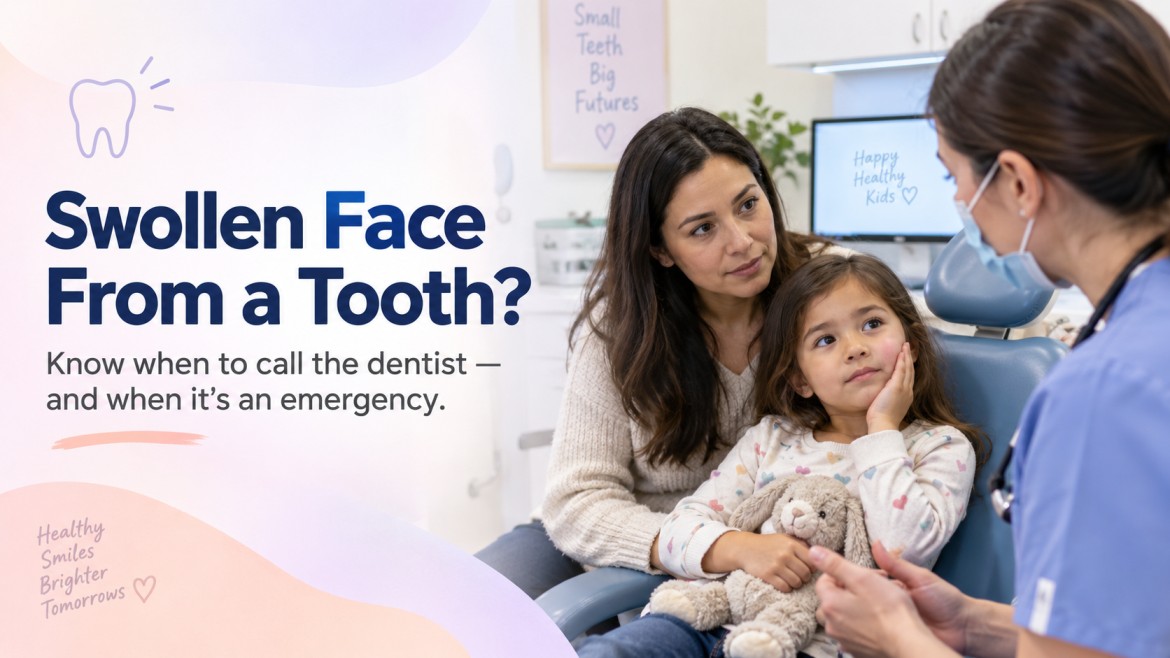
Sudden cheek pain in a child is most commonly caused by a dental problem, like a cavity, tooth abscess, or an erupting molar. It can also come from teeth grinding, sinus infections, or jaw joint issues. If your child's cheek pain comes with swelling or fever, call a pediatric dentist the same day. For mild pain without swelling, some simple home care can help until you get to the office.
Your child grabs their cheek in the middle of dinner and starts crying. No fall. No visible bump. Just sudden pain, and you have no idea where it's coming from.
If this sounds familiar, you're not alone. Sudden cheek pain in a child is one of the most common concerns that brings parents into our office at Dr. Leslie Jacobs Pediatric Dentistry in Lafayette, LA.
The tricky part? Cheek pain in kids can come from many different places, such as teeth, jaw joints, sinuses, or even salivary glands. And younger children often can't tell you exactly where it hurts, which makes it even more confusing.
This guide is written to help you understand the most common causes of sudden cheek pain in children, what warning signs to look for, and exactly when you should call a dentist.
What Does 'Cheek Pain' Really Mean in Children?
Before we get into the causes, it helps to understand something important: when a child says their cheek hurts, they might not actually mean the cheek itself.
Young children, especially those under age 8, have a hard time pinpointing where pain is coming from. A throbbing back tooth can feel like cheek pain. Jaw joint soreness can feel like ear pain. Sinus pressure can feel like facial pain on both sides.
So when your child points to their cheek, think of it as a starting point, not the whole picture. Here's a simple way to think about it:
Keeping this in mind will help you describe the symptoms more clearly to your dentist, which means faster diagnosis and faster relief for your child.
9 Common Causes of Sudden Cheek Pain in Children
Here are the nine most common reasons a child may suddenly experience cheek or facial pain, explained in plain language so you know exactly what you're dealing with.

1. Tooth Decay (Cavities)
This is the number one dental cause of cheek pain in children. Cavities happen when bacteria in the mouth feed on sugar and produce acid that slowly eats away at tooth enamel. Once the decay gets deep enough, it reaches the nerve, and that's when the pain starts.
The pain from a cavity often feels like it's coming from the cheek or jaw area, especially with the back teeth.
What makes this tricky with kids is that they often adapt to low-level pain and don't mention it until the cavity has gotten much worse.
Signs to watch for:
• Tooth sensitivity to cold, sweet, or hot foods
• Pain when chewing or biting down
• Visible dark spots or holes on the teeth
• Sudden sharp pain that comes and goes
What to do: Schedule a dental appointment as soon as possible. Cavities don't heal on their own; they only get bigger and more painful over time.
2. Dental Abscess (Tooth Infection)
A dental abscess is what happens when an untreated cavity becomes a full-blown infection. Bacteria reach the inner part of the tooth (the pulp), and a pocket of pus forms at the root. This causes throbbing, constant pain and often, visible swelling in the cheek or jaw.
In children, this is especially important to address quickly. An infection in a baby tooth can spread and actually damage the permanent tooth developing underneath it.
Signs to watch for:
• Throbbing pain that doesn't stop
• Visible swelling in the cheek or jaw
• Fever along with face or tooth pain
• A pimple-like bump on the gums near a tooth
• Child refuses to eat or is clearly in a lot of pain
Emergency Alert: If your child has cheek swelling AND a fever, do not wait. Call Dr. Leslie Jacobs Pediatric Dentistry in Lafayette right away for a same-day appointment. A dental abscess can spread beyond the mouth if left untreated.
3. Erupting Molars (6-Year and 12-Year Molars)
This is one of the most common and most misunderstood causes of sudden cheek pain in children. When permanent molars are coming in, the gum tissue has to stretch and move out of the way. That process can be genuinely painful.
The 6-year molars typically come in between the ages of 5 and 7. The 12-year molars arrive between ages 11 and 13. Many parents mistake this pain for an ear infection or even a toothache from an existing tooth.
Signs to watch for:
• Sore, swollen gum in the back of the mouth
• Cheek or jaw pain on one side
• Mild fever (low-grade)
• Difficulty chewing on that side
• You can see or feel the edge of a tooth starting to push through the gum
Good news: This pain is temporary. It usually improves within 1 to 2 weeks as the tooth fully erupts. Children's pain relievers and soft foods can help in the meantime. But if the pain gets significantly worse or a high fever develops, it's worth a dental check.
4. Teeth Grinding (Bruxism)
Did you know that up to 38% of children grind their teeth, usually at night while they're asleep? It's called bruxism, and most parents don't even realize it's happening until a dentist notices worn-down teeth during a checkup.
When a child grinds their teeth night after night, the muscles in the jaw and cheeks get overworked. This leads to soreness, tightness, and cheek pain, usually worse in the morning.
Signs to watch for:
• Child complains of cheek or jaw soreness in the morning
• Frequent morning headaches
• You can hear grinding sounds at night
• Dentist notices worn or flattened teeth
• Child is under stress or anxiety (common trigger in school-age kids)
What to do: Mention it at your next dental visit. A pediatric dentist can fit your child with a custom night guard that protects their teeth and gives those jaw muscles a real break.
5. Temporomandibular Joint Disorder (TMD/TMJ)
The temporomandibular joint, or TMJ, is the hinge that connects your lower jaw to your skull, located just in front of each ear. When this joint isn't working properly, it's called TMD (temporomandibular disorder).
In children, TMD is often connected to bruxism (teeth grinding), a misaligned bite, or a jaw injury. The pain is usually felt near the ear, cheek, or temple, and it can be sharp or dull depending on the case.
This condition is often mistaken for an ear infection in younger kids, since the jaw joint sits so close to the ear canal.
Signs to watch for:
• Clicking, popping, or grinding sound when the jaw opens or closes
• Difficulty opening the mouth wide
• Pain near the ear or temple when chewing
• Jaw feels 'stuck' or locks occasionally
What to do: A pediatric dentist can evaluate the jaw joint and bite alignment. Treatment may include a custom oral appliance, jaw stretching exercises, or a referral to a specialist if needed.
6. Sinus Infection
This one surprises a lot of parents. The upper sinus cavities sit directly above the roots of the upper back teeth. When the sinuses become inflamed or infected, the pressure can feel exactly like tooth pain or cheek pain, even though the teeth themselves are perfectly fine.
Sinus-related cheek pain tends to be more common during cold and flu season or during high allergy periods, which in Lafayette can be quite significant given the local climate.
Signs that point to sinus, not dental, pain:
• Pain on both sides of the face (dental pain is usually one-sided)
• Pain gets worse when the child bends forward or leans over
• Runny or stuffy nose along with facial pain
• No tooth sensitivity to hot or cold foods
What to do: If we examine your child and don't find a dental cause for the pain, we'll let you know and recommend a visit to your pediatrician for a sinus evaluation.
7. Sialadenitis (Swollen Salivary Gland)
The parotid gland, the largest salivary gland in the body, is located right inside the cheek, near the jaw. When this gland becomes blocked or infected, it swells up and causes pain that feels like it's coming from the cheek or the area just below the ear.
In children, this can happen due to dehydration, a blocked salivary duct, or a viral infection. It's less common than the other causes on this list, but it's worth knowing about.
Signs to watch for:
• A visible or felt lump inside the cheek or below the ear
• Cheek tenderness or swelling that gets worse when eating
• Dry mouth
• Mild fever in some cases
What to do: Encourage your child to drink plenty of water. A warm compress on the area can help. If the swelling doesn't improve in a day or two, or if there's fever, get it checked by a dentist or doctor.
8. Gum Infection or Cellulitis
Although gum disease is more common in adults, children can develop gum infections too, especially around teeth that have heavy plaque buildup or around partially erupted teeth where food gets trapped.
In more serious cases, a bacterial infection can spread into the soft tissue of the face. This is called cellulitis, and it's a condition that needs prompt medical attention.
Signs to watch for:
• Red, swollen, or bleeding gums around a specific tooth
• Facial swelling that seems to be growing or spreading
• Fever along with facial swelling
• Skin around the cheek looks red or feels warm to the touch
Important: If swelling is spreading toward the eye, neck, or throat, or if your child is having trouble swallowing, go to the emergency room immediately. This is rare, but spreading facial infections are serious.
9. Trauma or Injury to the Face
Kids fall. They run into things. They take a ball to the face at soccer practice. Sometimes the pain from a facial injury doesn't appear right away; it can show up hours later as soreness, swelling, or a dull ache in the cheek or jaw area.
Even if the hit seemed minor at the time, a tooth could have been shifted, cracked, or pushed into the gum without being visibly obvious.
Signs to watch for after a facial injury:
• Pain or soreness developing hours after the impact
• Tooth that feels loose or looks slightly out of position
• Gum bleeding that continues beyond 10–15 minutes
• Jaw clicking or difficulty opening the mouth after the injury
What to do: If a tooth was knocked out completely, place it in a small cup of milk and call us immediately; time matters. For injuries involving a loose tooth or persistent pain, schedule a same-day visit.
When Is Cheek Pain a Dental Emergency?

Not every episode of cheek pain requires an emergency call. But some signs should never be ignored. Here's a clear breakdown to help you decide what to do:
Call your pediatric dentist TODAY if your child has:
- Visible swelling in the cheek, jaw, or neck
- Fever (above 100.4°F) along with face pain
- A pimple-like bump or blister on the gums
- Pain that has lasted more than 24–48 hours without improving
- Child refuses to eat or drink because of the pain
- Jaw that won't open or close normally
Go to the ER immediately if:
- Swelling is spreading rapidly toward the throat or neck
- Your child has difficulty breathing or swallowing
- The child appears extremely ill, weak, or unresponsive
It's okay to wait 1–2 days (but still call us) if:
- Pain is mild and comes and goes
- No swelling or fever is present
- Discomfort seems linked to an erupting tooth
- Morning cheek soreness that goes away during the day (likely grinding)
Home Remedies to Soothe Cheek Pain in Children

While you're waiting for your dental appointment, these simple steps can help ease your child's discomfort:
Cold compress: Wrap ice in a thin cloth and apply it to the outside of the cheek for 15 to 20 minutes. Repeat every few hours. This reduces swelling and numbs the area.
Children's pain reliever: Ibuprofen (Advil or Motrin) works especially well for dental pain because it's anti-inflammatory. Always follow dosing instructions based on your child's weight, not just their age.
Saltwater rinse: For children who are old enough to rinse and spit (usually 6 and up), mix half a teaspoon of salt into a glass of warm water. Have them swish gently for 30 seconds and spit it out. This can help reduce gum irritation.
Soft foods only: Stick to yogurt, mashed potatoes, smoothies, or soup. Avoid crunchy, hard, or very hot and cold foods that could make the pain worse.
Keep brushing: It might seem counterintuitive, but keeping the mouth clean is important, especially if there's an infection involved. Brush gently around the sore area.
What NOT to do:
❌ Do not place aspirin directly on the gum or tooth; this can cause a chemical burn to the soft tissue
❌ Do not ignore worsening swelling or a rising fever
❌ Do not assume the pain will go away on its own if it's been more than 48 hours
Remember: home remedies manage discomfort. They don't treat the cause. A follow-up dental visit is always necessary.
What Will a Pediatric Dentist Do for Cheek Pain?
We know that a dental visit, especially an unexpected one, can feel stressful for both parents and children. Here's exactly what to expect when you bring your child to Dr. Leslie Jacobs Pediatric Dentistry in Lafayette:
Step 1, Visual exam: We'll look at the teeth, gums, and soft tissue inside the mouth, as well as the cheek area, to identify any obvious signs of infection, decay, or irritation.
Step 2, Digital X-rays: These help us see what's happening beneath the surface, hidden cavities, abscess formation, or issues with tooth roots that can't be seen with the naked eye.
Step 3, Jaw and bite check: We'll assess the jaw joint, bite alignment, and range of motion to look for signs of TMJ disorder or grinding.
Step 4, Soft tissue and lymph node check: We check for any swelling in the neck or jaw area that might indicate a spreading infection.
Step 5, Diagnosis and next steps: We'll explain exactly what we found, in plain language, and walk you through the best treatment options for your child.
Depending on what we find, treatment might include a filling or dental crown, an antibiotic for infection, a tooth extraction in more advanced cases, a custom night guard for grinding or TMJ, or a referral to a pediatric ENT specialist if we suspect a sinus issue.
At Dr. Leslie Jacobs Pediatric Dentistry, we use child-friendly language and gentle techniques during every visit, including emergency ones. Our goal is to make sure your child leaves feeling better, not more anxious.
How to Prevent Cheek Pain and Dental Problems in Children
The best cheek pain is the one that never happens. Here are some simple habits that go a long way in keeping your child's mouth healthy and pain-free:
• Brush twice a day with a fluoride toothpaste, use a rice-grain amount for toddlers, a pea-sized amount for children 3 and up
• Floss daily, even for young children, especially between teeth that are touching
• Limit sugary snacks, sticky candies, and juice between meals
• Schedule a dental checkup every 6 months, as many problems are completely painless until they're serious
• Ask about dental sealants for the back molars, which act as a protective coating over the grooves where cavities most often start
• If your child grinds their teeth at night, mention it at your next appointment so we can monitor for wear
• Make sure your child wears a mouthguard during any contact sports
Small, consistent habits make a huge difference. Most of the painful dental problems we see in children at our Lafayette office were entirely preventable with regular care.
Frequently Asked Questions
Why does my child have sudden cheek pain but no swelling?
Pain without swelling is usually a sign that the problem is still in its early stages. The most common causes are a cavity, the beginning of a tooth infection, an erupting molar, or teeth grinding. It's less urgent than pain with swelling, but it still needs a dental visit within a day or two. Early treatment means less pain and a simpler fix.
Can a sinus infection cause cheek pain in a child?
Yes, absolutely. The sinus cavities sit directly above the roots of the upper back teeth, so when they're inflamed or infected, the pressure can feel exactly like tooth or cheek pain. The key difference is that sinus pain usually affects both sides of the face, gets worse when the child bends forward, and comes with congestion or a runny nose. Dental pain is usually one-sided and gets worse with hot or cold food.
My child has a swollen cheek and a fever- Is this an emergency?
Yes. Swelling combined with fever is a clear sign of a possible dental abscess or a spreading infection. This needs to be evaluated the same day; don't wait to see if it improves on its own. Call Dr. Leslie Jacobs Pediatric Dentistry in Lafayette immediately. If the swelling spreads toward the neck or your child has trouble breathing or swallowing, go to the emergency room right away.
Can teeth grinding really cause cheek pain in children?
It can, and it's more common than most parents realize. When children grind their teeth at night, they're putting a tremendous amount of repeated pressure on the jaw muscles and cheeks. Over time, this causes muscle fatigue, soreness, and cheek pain, usually felt most in the morning. If your child often wakes up with cheek or jaw soreness, or if you hear grinding at night, bring it up at your next dental visit.
How long does cheek pain from an erupting molar last?
Usually about 1 to 2 weeks. As the new permanent molar pushes through the gum tissue, it causes inflammation and soreness in that area. Children's ibuprofen and a soft food diet can help manage the discomfort. If the pain gets significantly worse, there's a high fever, or you notice any swelling spreading, it's worth a dental check to rule out infection around the erupting tooth.
How do I know if my child's cheek pain is dental or something else?
Dental pain is typically one-sided, often gets worse with hot, cold, or sweet foods, and may be accompanied by gum sensitivity or a visible spot on the tooth. Sinus pain tends to be on both sides, worsens when bending forward, and comes with nasal congestion. TMJ pain is felt near the ear and jaw joint, especially when chewing. When in doubt, start with a pediatric dentist. We can identify dental causes quickly, and if it turns out to be something else, we'll point you in the right direction.
Your Child Doesn't Have to Be in Pain. We're Here in Lafayette
Sudden cheek pain in a child can feel really alarming as a parent. But in most cases, there's a clear cause and a clear solution. The key is not to wait too long.
Whether it's a cavity that needs a filling, an erupting molar that just needs time, or an infection that needs immediate attention, the team at Dr. Leslie Jacobs Pediatric Dentistry in Lafayette is here to help you figure out exactly what's going on and fix it.
We see children of all ages, from toddlers to teenagers, and we know how to make dental visits feel safe and comfortable, even when they come with a little anxiety attached.
.jpg)
.jpg)


