.png)
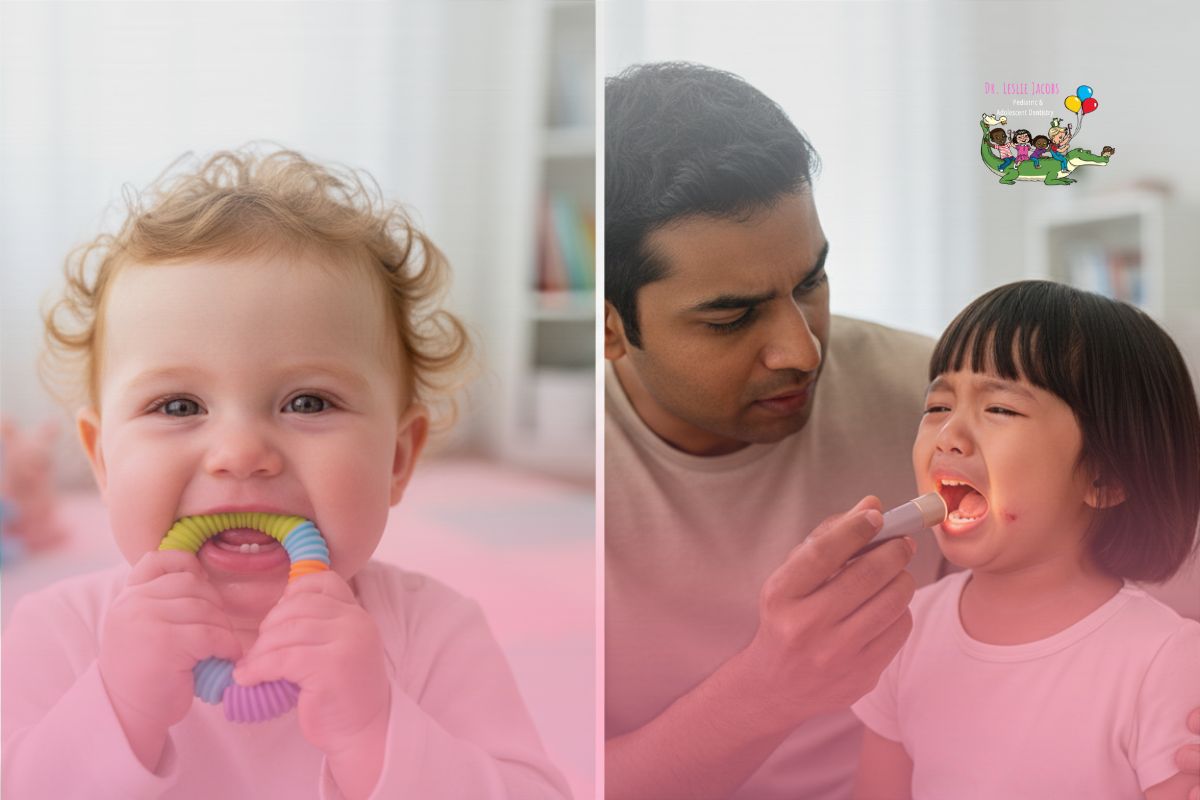
You hear your 8-month-old crying in the middle of the night. Their gums look red and swollen. They're drooling more than usual and refusing to eat. Your mind races with questions: Is this just normal teething, or is something seriously wrong?
This confusion keeps thousands of parents awake at night. The symptoms of teething can sometimes look alarming, while real dental emergencies might not always seem obvious at first glance. Understanding the difference helps you respond appropriately without unnecessary panic or dangerous delays in treatment.
According to the American Academy of Pediatric Dentistry, most children experience teething between 6 and 30 months of age. During this same period, babies are learning to crawl, walk, and explore their world, which increases the risk of mouth injuries. Knowing whether your baby's discomfort is normal development or a genuine emergency is one of the most important skills you can develop as a parent.
This guide will help you distinguish between typical teething symptoms and situations requiring immediate dental care, so you can make confident decisions about your baby's oral health.
What Normal Teething Actually Looks Like
.png)
Teething is a natural developmental process that every baby goes through. While it causes discomfort, it is not a medical emergency and does not require urgent dental intervention.
Typical Teething Symptoms
When a tooth is preparing to break through your baby's gum, you'll likely notice several common signs:
Physical symptoms:
- Heavy drooling that may cause a rash or chapped skin around the mouth and chin
- Red, swollen, or tender gums where the tooth is emerging
- A strong urge to chew or bite on anything within reach
- Mild temperature increase (below 100.4°F)
Behavioral changes:
- Increased irritability and fussiness, particularly in the evening hours
- Disrupted sleep patterns with more frequent night waking
- Changes in eating habits or temporary loss of appetite
- Pulling at ears or rubbing cheeks due to pain radiating from the gums
These symptoms typically begin 1 to 7 days before a tooth actually erupts through the gum surface. Once the tooth breaks through, the discomfort usually resolves within a day or two.
Research published in Pediatrics journal found that teething symptoms are generally mild and temporary. If symptoms are severe or long-lasting, another cause should be investigated.
Things That Look Scary But Are Actually Normal
Many parents rush to the emergency room or dentist for situations that are completely normal parts of the teething process:
Deeply red or purple gums: Inflammation is expected as the tooth pushes through tissue. The area right where a tooth will emerge often looks quite dark and swollen.
Eruption cysts (blood blisters): These bluish, purple, or translucent fluid-filled bumps appear on the gum where a tooth is about to break through. They look alarming but are completely harmless and will disappear on their own when the tooth emerges. Do not try to pop or drain them.
More crying than usual: Teething genuinely hurts, and babies express this through crying. However, your baby should still have periods throughout the day when they're happy, playful, and able to be comforted.
Temporary refusal of solid foods: Sore gums can make chewing uncomfortable. Your baby may prefer softer foods or liquids for a few days but should still be willing to drink and eat some foods.
Slight fever: A mild temperature elevation (under 100.4°F or 38°C) can occur with teething. However, higher fevers are not caused by teething and indicate illness.
What Teething Does NOT Cause
It's important to understand that teething does not cause:
- High fever (100.4°F or higher)
- Diarrhea or vomiting
- Severe diaper rash
- Significant bleeding from the gums
- Complete refusal of all food and liquids
- Extreme lethargy or unusual sleepiness
If your baby has these symptoms, they're likely sick with an infection or illness unrelated to teething and should be evaluated by a pediatrician.
Safe Ways to Relieve Teething Discomfort
You can help your teething baby feel better with these proven methods:
Cold therapy:
- Offer a clean, damp washcloth that's been chilled in the refrigerator
- Provide refrigerated (not frozen) teething rings made from safe, BPA-free materials
- Give cold foods like chilled applesauce, yogurt, or pureed fruits if your baby eats solids
Gentle pressure:
- Massage your baby's gums with a clean finger using gentle circular motions
- Let your baby chew on a clean, textured teething toy
Distraction:
- Extra cuddles and comfort
- Engaging activities to take their mind off discomfort
- Maintaining regular routines as much as possible
Critical safety warning: The FDA issued a strong warning against using teething gels or liquids containing benzocaine for children under 2 years old. These products can cause methemoglobinemia, a rare but serious condition that reduces the amount of oxygen carried in the bloodstream. Similarly, homeopathic teething tablets have been associated with serious adverse events and should be avoided.
Recognizing Real Dental Emergencies
.png)
Unlike the gradual onset of teething symptoms, dental emergencies typically happen suddenly due to trauma or infection. These situations require professional evaluation and treatment.
Traumatic Injuries Requiring Immediate Care
If your baby experiences any of these following an accident or fall, contact your dentist immediately:
Severe bleeding:
- Blood flowing from the mouth that continues for more than 10 to 15 minutes despite applying direct pressure with clean gauze
- Blood pooling in the mouth
- Bleeding that restarts multiple times after you thought it had stopped
Tooth displacement:
- A tooth knocked completely out of its socket
- A tooth pushed up into the gum tissue (looks shorter or appears to be missing)
- A tooth pushed to the side or at an unusual angle
- A tooth that suddenly becomes very loose or moves when touched
Tooth fractures:
- Visible crack or break in the tooth
- Chip that exposes pink or red tissue inside the tooth (the pulp)
- Sharp edges that could cut your baby's tongue or cheek
Soft tissue damage:
- Deep cuts or tears in the lip, tongue, or gums
- Injury that goes completely through the lip
- Tissue that appears torn or hanging loose
Facial swelling:
- Swelling that develops rapidly and continues to increase
- Swelling that affects the eye area or causes the face to look asymmetric
- Swelling that makes it difficult for your baby to close their mouth
For comprehensive guidance on handling these specific injury types, including step-by-step first aid instructions, see our complete guide: [Infant Dental Emergencies: A Parent's Complete Guide to Baby Mouth Injuries](link to main article).
Signs of Dental Infection
Infections can develop after injuries or may occur spontaneously. These require same-day dental evaluation:
Fever with oral symptoms:
- Temperature above 100.4°F (38°C) accompanied by mouth pain, swelling, or visible gum problems
- Remember: fever alone is not caused by teething
Visible infection signs:
- Pus or white/yellow drainage around a tooth or from the gums
- A raised bump or "pimple" (abscess) on the gum, especially near a specific tooth
- Severe swelling that appears suddenly
- Red streaks spreading from an area of the mouth
Functional problems:
- Foul odor from your baby's mouth
- Complete refusal to eat or drink anything for more than 12 hours
- Extreme irritability that cannot be consoled
- Unusual drooling beyond normal teething amounts
According to the Journal of Clinical Pediatric Dentistry, dental infections in young children can progress quickly and may spread to other areas, making prompt treatment essential.
Foreign Objects and Obstructions
Sometimes objects become stuck in your baby's mouth:
Situations requiring professional removal:
- Food, toy parts, or other objects wedged tightly between teeth
- Objects embedded in gum tissue that you cannot easily remove
- Any obstruction preventing your baby from closing their mouth normally
- Objects lodged in a way that causes ongoing pain or bleeding
If your baby is choking or having any breathing difficulty, call 911 immediately. If the object is stuck but breathing is normal, contact your dentist or pediatrician for guidance.
The Middle Ground: When to Wait and When to Call
.png)
Not every situation falls neatly into "normal teething" or "emergency" categories. Here's how to handle those gray areas.
Safe to Monitor at Home for 24 Hours
Some minor issues can be watched at home initially:
- Very light gum bleeding that stops within a few minutes after a minor bump
- A small bruise or bump on the gum following a fall (if not worsening)
- Mild sensitivity when you gently touch a specific area
- Temporary pinkish color in a tooth that just happened after an impact
If any of these worsen or don't improve within 24 hours, call your dentist.
Call Your Dentist the Next Business Day
Schedule an appointment for these concerns:
- A tooth that appears darker, grayer, or yellower 24 hours after an injury (indicates nerve damage)
- Your baby consistently favoring one side of their mouth when chewing
- Discomfort that persists well beyond the typical teething timeframe
- Concerns about tooth position or alignment after an incident
- A tooth that seems to be erupting in an unusual location
Call Your Dentist Immediately (Same Day)
Don't wait for these situations:
- Any tooth knocked completely out
- Bleeding that won't stop with 15 minutes of firm pressure
- A tooth forced out of its normal position
- Any visible break or crack showing the inside of a tooth
- Signs of infection (fever, swelling, pus, or foul odor)
- Severe pain that prevents eating or sleeping
The team at Make Your Kid Smile in Lafayette provides emergency dental services for infants and toddlers. Having an established relationship with a pediatric dentist ensures you have expert guidance when urgent situations arise.
Quick Comparison: Teething vs. Emergency
When Your Instincts Say Something's Wrong
As a parent, you know your baby better than anyone. If something feels off, even if it doesn't match the specific criteria listed here, trust your instincts.
Call your dentist if:
- You have a gut feeling something is wrong
- Your baby's behavior seems very different from their usual teething pattern
- You're losing sleep with worry
- You'd feel better having a professional evaluate the situation
Pediatric dentists understand that parents need reassurance. They would always rather examine your baby and provide peace of mind than have you wait while a serious problem worsens.
For families in Lafayette, Louisiana, Make Your Kid Smile offers both routine care and emergency services. Establishing a relationship before problems arise means you have a trusted expert to call when concerns develop.
Frequently Asked Questions
1. Can teething cause a high fever?
No. While teething may cause a slight temperature increase (up to 100.4°F), it does not cause high fevers. A study published in Pediatrics examined over 19,000 tooth eruption days and found no association between teething and fever above 100.4°F.
If your baby has a fever of 100.4°F or higher, they likely have an infection or illness unrelated to teething. Contact your pediatrician for evaluation.
2. My baby's gum is bleeding a little where a tooth is coming in. Is this normal?
Minimal spotting or a tiny amount of blood when a tooth breaks through the gum surface can be normal. However, continuous bleeding, blood pooling in the mouth, or bleeding that lasts more than a few minutes is not typical of teething and should be evaluated.
Eruption cysts (blood blisters) may also release a small amount of blood-tinged fluid when they rupture as the tooth emerges. This is normal and will resolve quickly.
3. How long does teething pain last?
Teething discomfort typically begins 1 to 7 days before a tooth breaks through and resolves within 24 to 48 hours after the tooth emerges. If your baby seems uncomfortable for longer periods, another cause should be investigated.
Remember that babies get multiple teeth over many months, so you may see recurring periods of teething symptoms as different teeth erupt.
4. My baby fell and now has a small bump on their gum. Should I call the dentist?
A small bump or bruise on the gum after a minor fall can be monitored at home for 24 hours if:
- The bump is not growing larger
- There's no continuous bleeding
- Your baby is eating and acting relatively normally
- No teeth appear loose or damaged
However, call your dentist if the bump increases in size, starts draining pus, causes increasing pain, or doesn't improve within 24 hours.
For detailed guidance on specific infant mouth injuries, see our comprehensive article: [Infant Dental Emergencies: A Parent's Complete Guide](link to main article).
5. Should I give my baby pain medication for teething?
You can give age-appropriate doses of acetaminophen (Tylenol) or ibuprofen (for babies 6 months and older) for teething discomfort. Always follow weight-based dosing instructions and never exceed the recommended amount.
However, never use:
- Aspirin (risk of Reye's syndrome)
- Teething gels containing benzocaine (FDA warning for under 2 years)
- Prescription pain medications without doctor approval
6. Can teething cause diarrhea or diaper rash?
No reliable scientific evidence supports teething as a cause of diarrhea or severe diaper rash. These symptoms indicate illness or another problem and should be evaluated by your pediatrician.
Some studies suggest that increased saliva production during teething may cause slightly looser stools, but true diarrhea is not a teething symptom.
7. My baby bit their lip while teething and it bled a lot. What should I do?
Mouth injuries bleed heavily because of rich blood supply in oral tissues, often looking more serious than they are.
Apply firm pressure with clean gauze for 10 minutes without lifting to check. If bleeding stops within 15 minutes and your baby is acting normally, you can monitor at home.
Call your dentist if bleeding continues after 15 minutes of pressure, the cut looks deep or gaping, or you're concerned about the severity.
8. How do I know if my baby's tooth is loose from an injury or just naturally getting ready to fall out?
Baby teeth don't naturally loosen until around age 5 or 6, much older than the 6 to 24 month range when most teething occurs. If your baby under age 3 has a loose tooth, it's almost certainly from trauma and needs dental evaluation.
Even if the looseness seems minor, have your dentist examine the tooth to check for damage to the permanent tooth bud developing underneath.
Taking Action: Your Next Steps
Understanding the difference between teething and dental emergencies gives you confidence to respond appropriately when your baby is uncomfortable.
For Teething Relief
- Keep safe teething toys readily available
- Have age-appropriate pain medication on hand with proper dosing information
- Maintain regular routines to provide comfort and stability
- Be patient and know that each teething episode is temporary
For Emergency Preparedness
- Save your pediatric dentist's phone number, including after-hours emergency line, in your phone
- Keep a basic first aid kit with gauze, cold packs, and emergency contact information
- Know the location of the nearest emergency room
- Review the warning signs that require immediate professional care
Establish Dental Care
If you haven't already, schedule your baby's first dental visit by age 1 or within six months of the first tooth appearing. This early visit:
- Creates a dental home for emergencies
- Helps your baby become comfortable with dental care
- Allows the dentist to monitor development and catch problems early
- Gives you a trusted expert to call with questions
For families in Lafayette, Make Your Kid Smile specializes in pediatric dental care from infancy through adolescence.
The Bottom Line
Teething is a normal, temporary part of your baby's development. While it causes discomfort, it should not cause high fevers, severe pain, bleeding, or dramatic changes in your baby's health.
Real dental emergencies typically involve trauma (falls, collisions, accidents) or infection, and they require professional evaluation and treatment. These situations come on suddenly and often include visible damage, uncontrolled bleeding, or signs of infection.
When in doubt, call your dentist. Pediatric dental professionals understand that parents need guidance and reassurance. They would rather examine your baby for a minor concern than have you wait while a serious problem develops complications.
Trust your instincts as a parent. You know your baby better than anyone, and if something feels wrong, it's always appropriate to seek professional advice.
For more detailed information on handling specific dental injuries in infants, including knocked-out teeth, broken teeth, and mouth lacerations, read our complete guide: [Infant Dental Emergencies: A Parent's Complete Guide to Baby Mouth Injuries (6-24 Months)](link to main article).
Additional Resources
For pediatric dental care in Lafayette: Make Your Kid Smile
https://www.makeyourkidssmile.com/
For teething information: American Academy of Pediatric Dentistry
https://www.aapd.org/resources/parent/
For general child health questions: American Academy of Pediatrics - HealthyChildren.org
https://www.healthychildren.org/
For after-hours medical questions: Call your pediatrician's after-hours line or Nurse Hotline
Remember, your baby's oral health is an important part of their overall development. With knowledge, preparation, and access to quality pediatric dental care, you can confidently navigate both normal teething and unexpected emergencies.

.jpg)
.jpg)


