.png)
A child should see a dentist within six months of the first tooth coming in, or by their first birthday, whichever happens first. This early timing is recommended by pediatric dental and medical organizations because it lets a dentist monitor development, catch early problems, and help your child build a positive relationship with dental visits from the start. If your child is already older than one, there's no need to worry. The right time to start is now.
Key takeaways:
- The general guideline is age one or six months after the first tooth erupts, whichever comes first, not a hard deadline that applies identically to every child.
- Early visits focus on prevention and getting to know your child's mouth, not necessarily treatment.
- A toothache, swelling, a bump on the gum, or a tooth injury are reasons to be seen sooner, regardless of age.
- Starting later than age one doesn't mean anything has gone wrong; it just means it's time to get started.
- What a visit looks like changes a lot depending on your child's age, from a lap exam for an infant to a full checkup for a school-age child.
If you're wondering whether your baby "really" needs a dentist before they have many teeth, or you're trying to catch up after missing the age-one window, this guide walks through what the recommendation means, what actually happens at an early visit, and how to prepare, plus what changes if your child is older when you're just getting started.
Understanding the Age-One Recommendation
Where This Recommendation Comes From
The recommendation that children see a dentist by their first birthday comes from the American Academy of Pediatric Dentistry (AAPD), and it's echoed by the American Dental Association and the American Academy of Pediatrics. All three groups point to the same timing: a first dental visit within six months of the first tooth appearing, or by age one, whichever comes first. This isn't a marketing guideline; i t reflects decades of research on how early childhood tooth decay develops and how early it can be prevented.
What "Whichever Comes First" Means in Practice
Teeth don't all arrive on the same schedule. Some babies get their first tooth around six months, while others don't show one until closer to their first birthday. The "whichever comes first" language exists because a tooth that's been in the mouth for months is already exposed to the same risk- plaque, sugars, bacteria- that any tooth faces. If your baby's first tooth erupts early, that's the cue to schedule sooner rather than waiting for the birthday itself.
What If Your Child Does Not Have Any Teeth Yet?
An early visit isn't only about teeth. A dentist can evaluate gum health, jaw and mouth development, feeding-related habits, and oral hygiene routines even before any teeth are visible. If your child reaches close to their first birthday without a tooth yet, that's still an appropriate time for a first visit; the appointment simply shifts toward guidance and monitoring rather than examining teeth directly.
Why This Timing Matters More Than Most Parents Expect
Catching Early Tooth Decay Before It Becomes a Bigger Problem
Tooth decay in very young children, sometimes called early childhood caries, can develop faster than many parents expect, particularly on the front teeth of infants and toddlers. Left unaddressed, it can progress to pain, infection, or the need for more involved treatment. An early visit gives a dentist the chance to spot warning signs, such as white or brown spots on the teeth, well before they turn into something more serious.
Watching the Jaw, Bite, and Tooth Eruption Develop
Every child's mouth develops on its own timeline. A pediatric dental visit lets the dentist track whether teeth are coming in in a typical sequence and position, and whether the jaw and bite appear to be developing as expected. Identifying an unusual pattern early doesn't necessarily mean treatment is needed right away, but it does mean it can be monitored proactively instead of discovered later.
Establishing a Dental Home Before Anything Goes Wrong
A "dental home" is simply an ongoing relationship with a dental practice that knows your child's history and can provide continuous, coordinated care similar to how a pediatrician serves as a medical home. Starting this relationship early, before any problems exist, means your child already has a trusted point of contact if a concern or emergency comes up later.
How an Early, Low-Pressure Visit Can Support Future Dental Experiences
Because an early first visit usually involves little to no treatment, it gives your child a chance to experience a dental office as a normal, non-threatening place. Children who become familiar with the sounds, chair, and staff at a young age often adjust more easily to future visits, compared to a first exposure that happens alongside an urgent problem.
What May Be Missed When the First Visit Is Delayed
Waiting until a child is older, or waiting until a problem is already noticeable, means the dentist is starting from a later point. Early monitoring opportunities, anticipatory guidance on brushing and diet, and the chance to catch minor concerns while they're still minor can all be missed. This isn't about blame; it simply means there's a real, practical reason the recommendation is timed the way it is.
What the Age-One Dental Visit Actually Looks Like
How a Knee-to-Knee Exam May Work and Why It May Be Used
For infants and young toddlers, dentists often use what's called a knee-to-knee position: the parent and dentist sit facing each other with knees touching, and the child lies back with their head in the dentist's lap and legs in the parent's lap. This position lets the dentist see clearly into the mouth while the parent stays close, holds the child's hands, and offers reassurance throughout.
Why It Can Be Completely Normal for a Baby to Cry
Many babies cry during this position, even when nothing hurts. It's usually a reaction to being reclined, having a new face close to theirs, and having their mouth briefly examined, not a sign of pain or distress from the exam itself. This is common enough that it shouldn't be a cause for concern.
How Long a First Dental Appointment May Take
A first visit is typically brief, especially for an infant or young toddler, often somewhere in the range of 20 to 30 minutes. Much of that time is spent on the parent conversation described below rather than on the exam itself, which for a very young child may only take a few minutes.
What the Dentist Is Looking For
During the exam, the dentist checks the teeth present, the gums and other soft tissue, and how the jaw and bite are developing. They're also assessing your child's individual risk factors for cavities, based on things like diet, fluoride exposure, and home care habits.
Whether the Teeth May Be Cleaned at the First Visit
A cleaning isn't always part of a first visit, particularly for a child with only a few teeth. Whether cleaning is included depends on how many teeth are present and what the dentist observes during the exam.
Whether Fluoride Varnish May Be Recommended
Fluoride varnish is a topical treatment sometimes applied to help protect teeth once they've erupted, and many dentists offer it starting at the first visit. Whether it's recommended for your child depends on their individual risk assessment and current fluoride exposure from other sources, such as toothpaste and drinking water. This is a conversation to have directly with the dentist rather than something to expect automatically.
When Dental X-Rays May or May Not Be Needed
X-rays are not a standard part of a first dental visit for most infants and young toddlers. Whether and when they become appropriate depends on factors like visible symptoms, how the teeth are spaced, and the dentist's clinical judgment, not simply your child's age.
Why the Conversation With the Parent Is Often a Major Part of the Visit
For a first visit at this age, much of the appointment is really a conversation. Expect to discuss brushing technique, teething, feeding and bottle or sippy-cup habits, thumb or pacifier use, and any questions you have about your child's mouth. This guidance, sometimes called anticipatory guidance, is one of the most practical parts of an early visit, because it gives you a plan for the months ahead rather than just a snapshot of the current exam.
How to Prepare for Your Child's First Dental Appointment
Time the Appointment Around Naps and Feeds When Possible
Infants and toddlers generally do best at appointments when they're rested and recently fed, rather than tired or hungry. If you have flexibility, morning appointments often work well for younger children.
How to Talk About the Dentist in a Positive, Age-Appropriate Way
Keep the conversation simple and matter-of-fact: the dentist is going to look at their teeth and count them. Avoid words like "hurt," "shot," or "pain," even in reassurance ("it won't hurt"), since naming the fear can introduce it. For toddlers old enough to understand a short explanation, reading a children's book about visiting the dentist beforehand can help.
What to Bring and What to Complete Before the Appointment
Bring your child's medical history, including any medications and known allergies, along with your insurance information if applicable. Many offices send new-patient paperwork in advance; completing it ahead of time means less waiting with a restless toddler in the lobby.
Whether to Bring Siblings to the Visit
If possible, it can help to arrange care for siblings so you can focus fully on the child being seen, especially for a first visit. That said, this isn't a strict requirement, and many families do bring siblings along without issue; it comes down to what works for your family and how the office is set up.
Questions Worth Asking During the Appointment
A first visit is a good opportunity to ask about your child's individual cavity risk, the right brushing routine for their age, teething and pacifier habits, and when the next visit should be scheduled. Bring up anything specific you've noticed, even something that seems minor.
If Your Child Is Already Older Than One
If your child hasn't seen a dentist yet and is past their first birthday, the visit will simply be shaped by where they are developmentally now rather than the age-one benchmark.
Why Many Families Start Dental Visits Later Than Age One
Many parents simply haven't heard that the recommendation starts this early, especially since it's a relatively recent shift from older advice to "wait until age two or three." Others face practical barriers like scheduling, finding a pediatric dentist, or insurance logistics. This is common, and pediatric dental offices see it regularly.
Catching Up Without Guilt
There's no benefit to feeling guilty about the timing. What matters most is getting your child established with a dentist now, so ongoing preventive care can begin. A later start is simply a different starting point, not a setback that can't be addressed.
What a Late First Visit Does Not Automatically Mean
An older age at the first visit doesn't automatically mean your child has cavities, needs extensive treatment, or is behind in development. Many children who start dental visits at two, three, or older have perfectly healthy teeth and a straightforward first appointment.
When to Bring Your Child to the Dentist Sooner Than Planned
Certain signs warrant a dental evaluation regardless of your child's age or where they fall in a routine visit schedule.
Tooth Pain, Facial or Gum Swelling, or a Bump on the Gum
Pain, visible swelling in the face or gums, or a bump near a tooth can indicate infection and should be evaluated promptly rather than waiting for a scheduled checkup.
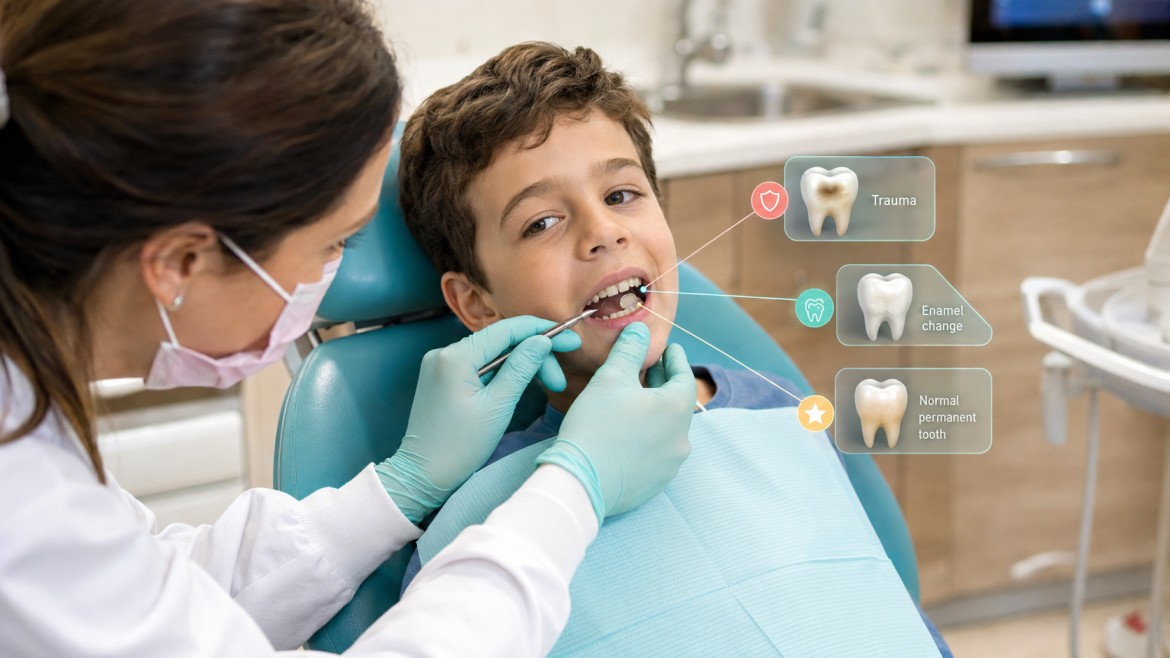
White, Brown, Gray, or Other Color Changes on a Tooth
Color changes on a tooth, white spots, brown staining, or gray discoloration can be an early sign of decay or, in some cases, an injury to the tooth. These are worth having examined rather than watching to see if they change.
Bleeding Gums or Trouble Chewing
Gums that bleed regularly, or a child who seems to be avoiding chewing on one side, are both reasons to have the mouth checked sooner rather than later.
Teeth Arriving Late, Out of Sequence, or in an Unusual Position
While there's a wide range of normal variation in when and how teeth erupt, a dentist can evaluate whether what you're noticing is within that range or worth monitoring more closely.
After a Fall, Chipped Tooth, or Knocked-Out Tooth
Dental trauma should be evaluated promptly. If a permanent tooth has been knocked out, time matters; contact a dentist immediately for guidance. For any facial injury involving heavy bleeding that won't stop, a possible broken jaw, or signs of a head injury, seek emergency medical care right away rather than waiting for a dental appointment.
What Happens After the First Dental Visit
How Often Young Children May Need Dental Checkups
A checkup roughly every six months is the general guideline for most children, though your dentist may recommend a different interval based on your child's individual cavity risk and needs.
What Parents May Be Asked to Do at Home
Following a first visit, expect guidance on brushing technique and frequency, appropriate toothpaste amount for your child's age, diet habits that affect cavity risk, and any habits like thumb-sucking or pacifier use worth monitoring.
When the Recommended Visit Schedule May Change
If your dentist identifies a higher cavity risk or a developing concern, they may recommend more frequent visits than the standard six-month interval. This is individualized and will be discussed directly with you.
What a Pediatric Dental Office Can Offer During a First Visit
The Additional Training Behind Pediatric Dental Care
A pediatric dentist completes dental school followed by additional specialty training focused specifically on treating infants, children, and adolescents, including those with special health care needs. This training centers on child development, behavior guidance, and the ways dental care needs to be adapted for growing patients.
How a Child-Focused Dental Environment May Support Young Patients and Parents
A pediatric dental office is generally set up around children's needs, from the size of the equipment to how the team communicates with young patients. For families going through a first visit, that environment can make the experience more approachable for both the child and the parent.
Cost and Insurance for a Child's First Dental Visit
What a First Dental Visit May Include
What's included in a first visit- an exam only, or an exam plus cleaning and fluoride- depends on your child's age, the number of teeth present, and what the dentist recommends after the assessment. Costs vary accordingly, so it's reasonable to ask the office what to expect for your child specifically when scheduling.
What to Check With Your Dental Insurance or Louisiana Medicaid Plan
Coverage for preventive pediatric dental visits varies by plan. If you have dental insurance or a Louisiana Medicaid plan, it's worth confirming coverage details and any age requirements directly with your plan or the dental office before your appointment.
A Healthy Start Begins With the First Dental Visit
The guideline is straightforward: a first dental visit by age one, or within six months of that first tooth, whichever comes first. What matters more than hitting that exact date, though, is getting your child started with regular dental care, whether your child is six months old or six years old and just getting their first checkup. Every starting point is a reasonable one to build from.
If you're in Lafayette, Louisiana, or the surrounding Acadiana area, including Youngsville and Broussard, and you're ready to schedule your child's first visit, Dr. Leslie Jacobs Pediatric Dentistry is here to help your family get started with preventive, age-appropriate care.
Frequently Asked Questions
Can I Hold My Child During the Dental Exam?
Yes. For infants and young toddlers, parents are typically closely involved in the exam, often in the knee-to-knee position described above, where you stay near your child and can hold their hands throughout.
Will My Child Need Treatment at the First Visit?
Usually not. A first visit is focused on examination, monitoring, and parent guidance. Treatment, if any is needed, is typically discussed and planned for a separate appointment rather than performed on the spot.
My Child Is Four and Has Never Seen a Dentist. What Should I Do?
Schedule a first visit now. The appointment will be tailored to your child's current age and development rather than treated as "late"; many children start around this age with a routine, uneventful first checkup.
Should I Book Separate Dental Appointments for Siblings?
This depends on the office and your family's preference. Some practices can see siblings back-to-back or together; it's worth asking when you schedule.
Does a Child's First Dental Visit Hurt?
For most children, a first visit involves only a visual exam and doesn't involve anything painful. Any discomfort during the appointment is more often related to a baby's reaction to being reclined or examined than to the exam itself.
Booking Your Child's First Dental Visit in Lafayette, LA
If your child is approaching their first birthday, already a bit older and due for a first checkup, or you've noticed something worth having looked at, Dr. Leslie Jacobs Pediatric Dentistry welcomes families throughout Lafayette, Youngsville, Broussard, and the surrounding Acadiana area. Visit makeyourkidssmile.com to schedule your child's first appointment, or explore more on preparing your child's daily oral hygiene routine between visits.