.png)
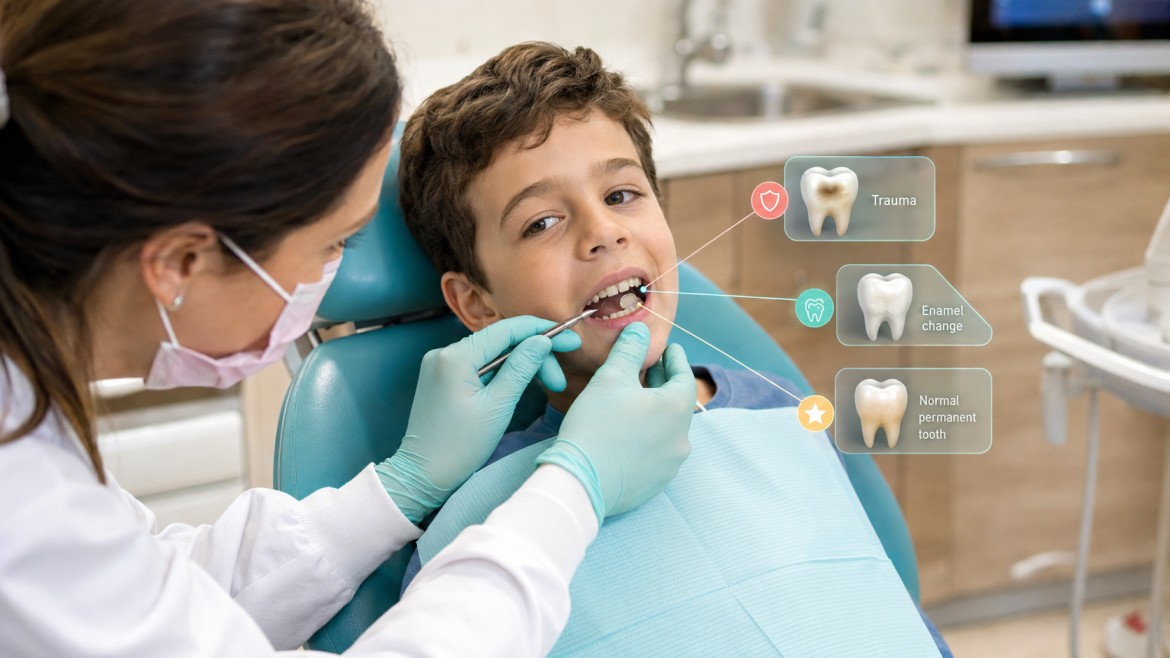
A discolored tooth in a child can mean several different things: a surface stain from food or iron drops, early tooth decay, fluorosis from fluoride exposure, or a sign that a tooth's nerve was injured in a fall. The color, location, and whether the tooth was recently bumped all help point to the likely cause, and a pediatric dental exam can confirm it.
Key Takeaways
- A single tooth that turns gray, dark, or pink after a bump is different from white spots or general yellowing, and it deserves a prompt look even without pain.
- Chalky white spots near the gumline usually point to early decay, while faint, symmetrical streaks across several teeth usually point to fluorosis.
- New permanent teeth normally look more yellow than the baby teeth next to them because of how the two tooth types are built, not because something is wrong.
- Whitening products are rarely the right first step for a discolored baby tooth and are not recommended for a mouth with a mix of baby and permanent teeth.
- Pain, swelling, or a small bump on the gum near a discolored tooth are signs to call the dentist promptly rather than wait for the next routine visit.
Noticing a change in your child's tooth color is unsettling, especially when nothing seems to have happened to cause it. Most discoloration in children turns out to be manageable, and many causes are not urgent, but a few do call for a prompt look. This guide walks through what different colors and patterns usually mean, how a fall or bump changes the picture, and what typically happens at a pediatric dental visit for a discolored tooth.
Discoloration in Young Children Is Not the Same as Teen Staining
The likely cause of a discolored tooth often depends on your child's age and which set of teeth is involved. In infants and toddlers, discoloration is more often linked to a fall, staining from liquid iron supplements, or the earliest stages of decay. In school-age children with a mix of baby and permanent teeth, the question often shifts to whether a new permanent tooth's color is simply normal development. In preteens and teens, staining starts to look more like what shows up in adults: surface stains from food and drink, or changes related to braces.
Why Whitening Is Almost Never the Answer for Baby Teeth
It's tempting to reach for a whitening product when a baby tooth looks stained, but this usually is not the right first step. Baby teeth have thinner enamel and a larger nerve chamber than permanent teeth, so whitening agents affect them differently than they affect adult teeth. The American Academy of Pediatric Dentistry discourages whitening a full mouth of teeth while a child still has a mix of baby and permanent teeth, since the two tooth types will not lighten to match each other. Whitening does have a place for certain verified situations, such as a permanent tooth discolored by old trauma, but that decision is made by a dentist on a tooth by tooth basis, not with an over-the-counter product at home.
What Parents Notice First and What It Usually Means
Most parents notice one of three patterns: a single tooth that looks different from its neighbors, a scattering of white spots, or teeth that simply look duller or more yellow than expected. A single tooth that stands out, especially one that has been through a fall, points toward something happening inside that one tooth. White spots point toward either the enamel surface or the way the enamel formed in the first place. General dullness across many teeth is more often about surface buildup or the normal transition from baby to permanent teeth. The table below breaks these patterns down in more detail.
Reading the Color: What Each Type of Discoloration Suggests
Because color alone rarely tells the whole story, here is a quick reference for what a pediatric dentist typically weighs when evaluating a discolored tooth.
When a Single Tooth Turns Dark After an Injury
A single front tooth that turns gray, dark, pink, or brown after a fall is one of the more common reasons parents contact a pediatric dentist outside of a routine visit. Falls are common in toddlers learning to walk and run, and front teeth take the brunt of it.
Why Color Change Can Appear Weeks or Months After the Fall
A tooth does not always change color right away. Inside every tooth is a soft tissue called the pulp, which contains small blood vessels and nerve tissue. A hard knock can injure these blood vessels even when the outside of the tooth looks completely fine. As the tooth responds to that injury over the following days to months, breakdown products from the blood can settle into the dentin layer and gradually darken the tooth from within. This is why a tooth can look normal on the day of the fall and turn gray weeks or even months later. Because parents often forget the original bump by the time the color shows up, it helps to mention any recent falls or mouth injuries at the next dental visit, even if the tooth looked fine at the time.
What a Gray Tooth Means for the Baby Tooth Itself
Gray or dark discoloration usually means the nerve inside the tooth has been affected by the injury, though the exact meaning of the color can vary from tooth to tooth. Some gray teeth settle down, and the pulp recovers; some fade to a lighter shade over time, and some stay discolored permanently without ever causing a problem. A pink or reddish tint typically points to bleeding or breakdown happening inside the tooth, while a yellow tint often means the tooth is laying down extra hard tissue inside itself as a protective response, which can actually be a sign the pulp is still active. None of these color changes can be reliably sorted out by looking at the tooth alone, which is why a pediatric dentist's exam, and sometimes an X-ray, matters more than the specific shade.
Whether the Permanent Tooth Underneath Is at Risk
Every baby tooth sits directly above the permanent tooth developing underneath it, which is one reason dentists take trauma to baby teeth seriously even though the baby tooth will eventually fall out on its own. Most simple bumps and color changes in baby teeth do not affect the permanent tooth below. More severe injuries, particularly ones that push the tooth up into the gum or knock it out entirely, carry a higher chance of affecting how the permanent tooth forms or erupts. This risk is part of why an evaluation after any significant mouth injury is worthwhile, even when the discoloration itself looks mild.
What Treatment Options Look Like
Treatment for a discolored baby tooth depends on what the exam and any X-rays show, the child's age, and whether the tooth is otherwise healthy and stable. Many discolored but symptom-free baby teeth are simply monitored at regular checkups, since a color change on its own does not always mean the tooth needs to come out. If there are signs of infection, such as a gum bump, swelling, or looseness, treatment may involve addressing the nerve inside the tooth or, in some cases, removing the tooth to prevent the infection from affecting the permanent tooth underneath. For a discolored tooth that is otherwise healthy, cosmetic options such as bonding or a crown can improve appearance, and the practice's restorative dentistry services can address any underlying structural need at the same time. No single treatment is right for every dark tooth, which is why an individual exam matters more than a general rule.
White Spots on Your Child's Teeth
White spots are one of the most common concerns parents bring up, and they can mean very different things depending on where they sit and how they're arranged.
Early Decay vs. Fluorosis: How They're Told Apart
Early decay usually shows up as a chalky, matte white patch near the gumline or between teeth, often on just one or two teeth where plaque tends to collect. It happens when acid from plaque bacteria pulls minerals out of the enamel faster than the mouth can replace them. Fluorosis looks different: faint white lines, streaks, or flecks spread symmetrically across several teeth, usually in the same spot on both sides of the mouth. Fluorosis develops while a permanent tooth is still forming under the gum, generally before age 8, from consistent exposure to more fluoride than the tooth needs, most often from a young child swallowing toothpaste. Once fluorosis is present, it does not mean the tooth is unhealthy or more prone to cavities. A pediatric dentist can usually tell the two apart by the pattern and location, and by asking about your child's fluoride exposure and toothpaste habits.
Why Early White Spots Can Sometimes Be Reversed
The earliest stage of decay, before an actual cavity forms, is often reversible. The tooth surface can still absorb minerals back from saliva and fluoride, a process called remineralization. Consistent brushing with fluoride toothpaste, cutting back on frequent sugar exposure, and a dentist's fluoride treatment can sometimes turn a white spot back into healthy enamel. Once a spot progresses past this early stage into an actual cavity, remineralization is no longer enough on its own, and a filling becomes the more likely next step. This is one reason catching white spots early, rather than waiting to see if they get worse, tends to give your child more options.
White Spots That Appear After Braces Come Off
Older children and teens sometimes notice white, chalky patches around where orthodontic brackets used to sit. These form the same way as any other early decay spot: plaque collects around the edges of the bracket, and if it isn't cleaned off thoroughly, the enamel underneath begins to demineralize. Because these spots often affect several teeth at once and show up on permanent teeth, many teens want cosmetic options to address them. Treatment ranges from fluoride and remineralizing pastes for milder cases to bonding or other cosmetic dentistry options for spots that don't respond, and a dentist can advise which fits the situation.
Stains That Come From Outside the Tooth
Not every stain comes from inside the tooth. Some sit on the surface and behave very differently from the intrinsic changes described above.
Food, Drink, and Iron Supplement Staining
Deeply colored foods and drinks, such as berries, tomato sauce, and dark juices, can leave surface stains on a child's teeth over time. Liquid iron supplements, often prescribed for iron deficiency, are a particularly common cause of darker staining in younger children. The iron reacts with bacteria in the mouth to form a dark, sometimes black, deposit, usually appearing as a line or spots along the gumline. This staining is cosmetic and does not mean the iron is harming the teeth or that a cavity is forming. If your child takes liquid iron, using a dropper aimed toward the back of the mouth and offering water afterward can reduce how much contact the iron has with the front teeth.
Why Some Stains Wipe Away, and Others Don't
Stains that sit only on the surface of the enamel, sometimes called extrinsic stains, can often be reduced or removed with brushing and a professional cleaning. Stains that have worked their way into the tooth structure itself, such as trauma-related darkening, fluorosis, or certain medication stains, are intrinsic and won't budge with brushing or a routine polish. A quick way to think about it: if a stain has been there since the tooth developed or since an internal injury, it's intrinsic; if it built up gradually from something your child ate, drank, or took, it's more likely extrinsic.
What a Professional Cleaning Can and Can't Remove
A professional cleaning is effective at removing surface plaque, tartar buildup, and most extrinsic stains from food, drink, or iron supplements, often restoring a noticeably brighter appearance. It cannot change the color of a tooth that is discolored from the inside, and it won't reverse fluorosis or enamel hypoplasia, since those changes are built into the enamel itself. Routine cleanings still matter for these teeth, since removing surface buildup makes it easier to see whether an underlying spot is stable or changing over time.
Why Baby Teeth Look Whiter Than Permanent Teeth
The Color Difference Parents Notice at Ages 6 and 7:
Around ages 6 and 7, most children start losing their front baby teeth, and the first permanent teeth begin to erupt. Parents are often surprised, sometimes alarmed, by how much more yellow the new permanent teeth look next to the remaining baby teeth. This is a normal part of development, not a sign of poor hygiene or a dental problem.
Why Two New Front Teeth Look Yellow Next to Baby Teeth:
Baby teeth have thinner, more opaque enamel and a thinner layer of dentin underneath, which gives them their bright, milky white appearance. Permanent teeth have thicker dentin, which has a naturally yellow tone, and their enamel is more translucent, letting more of that yellow show through. When a new permanent tooth erupts right next to a much whiter baby tooth, the contrast makes the color difference look more dramatic than it will once all the baby teeth are gone, and the smile evens out.
What Happens at the Appointment
If a color change is significant, sudden, or connected to an injury, here is generally what to expect at a pediatric dental evaluation.
How the Cause Is Identified
A pediatric dentist typically starts by asking about your child's history: any recent falls or injuries, medications or supplements, fluoride exposure, and how long the color change has been present. A visual exam of the location, pattern, and symmetry of the discoloration, along with checking the tooth for tenderness, swelling, or mobility, usually narrows down the likely cause. In many cases, the history and exam are enough to identify what's happening.
When an X-Ray Is Needed to See Inside the Tooth
An X-ray becomes useful when the dentist needs to see what's happening inside the tooth or below the gumline, most often after an injury or when there are signs of infection. It can show whether the pulp is affected, whether there's any sign of infection at the root, and how the developing permanent tooth underneath looks. Not every discolored tooth needs an X-ray. The decision depends on the child's symptoms, the type of discoloration, and what the dentist finds during the exam, not on the tooth's age alone.
The Range of Treatments for Discolored Baby Teeth
Depending on what's found, treatment can range from simply monitoring the tooth at future checkups, to a professional cleaning for surface stains, to fluoride treatment for an early white spot, to more involved restorative or cosmetic care for a tooth that needs it. The pediatric dentistry services at Dr. Leslie Jacobs Pediatric Dentistry cover this full range, so the plan can match what your child's specific tooth needs rather than a one-size-fits-all approach.
When to Call Right Away
Most discoloration can wait for a scheduled visit, but a few signs mean it's worth calling sooner.
Discoloration With Pain, Swelling, or a Gum Bump
If a discolored tooth is also painful, if the gum around it is swollen, or if you notice a small bump or blister on the gum near the tooth, call the dentist promptly. These signs can point to an infection that has developed in or around the tooth, and infections in baby teeth can affect the developing permanent tooth if left untreated.
A Tooth That Changes Color After a Recent Injury
Any tooth that changes color in the weeks after a fall or blow to the mouth is worth a dental evaluation, even if your child seems completely comfortable. Because internal injury doesn't always cause pain right away, the color change itself is often the most useful early clue.
Discoloration That Spreads or Darkens Quickly
A spot that is clearly getting bigger, darker, or spreading to nearby teeth over a short period is different from a stable stain that has looked the same for months. Rapid change is worth a prompt look rather than a wait-and-see approach. If your child also has facial swelling, a fever, or trouble swallowing or opening their mouth, this can signal a more serious infection and calls for immediate medical or emergency dental attention rather than waiting for a routine appointment.
Preventing Discoloration Before It Starts
Habits That Protect Enamel Color
- Brush twice a day with an age-appropriate amount of fluoride toothpaste, and supervise young children so they spit rather than swallow.
- Offer water after sugary or deeply colored foods and drinks, and limit how often your child sips juice or soda throughout the day.
- Use a properly fitted mouthguard for contact sports and active play once your child is old enough to wear one.
- If your child takes liquid iron, ask your pediatrician or pharmacist about administration tips that reduce contact with the front teeth.
- If your home uses well water, consider having it tested for fluoride level, since this affects how much additional fluoride your child needs.
Why Regular Cleanings Catch Color Changes Early
Routine dental visits give your pediatric dentist a baseline for what your child's teeth normally look like, which makes it easier to spot a genuine change early. Many color changes, from early white spots to the first signs of trauma-related darkening, are easiest to manage when caught early rather than after they've progressed. Regular cleanings also remove surface buildup that can make it harder to tell a stable stain from a developing problem.
Frequently Asked Questions
Will My Child's Gray Tooth Go Back to Normal?
Sometimes. A gray tooth can lighten over weeks to months as it heals; it can settle into a permanent yellow or gray shade without causing any problems, or it can indicate the nerve has died and needs treatment. Because these outcomes can look similar early on, the only way to know which path your child's tooth is on is through a dental exam, and sometimes a follow-up X-ray down the road.
Can a Discolored Baby Tooth Be Whitened?
Whitening isn't usually the first option for a discolored baby tooth, and full-mouth whitening isn't recommended while your child still has a mix of baby and permanent teeth. For a tooth that's otherwise healthy, cosmetic options like bonding or a crown are more commonly used to address appearance. Your pediatric dentist can walk through what fits your child's specific situation.
Does a Dark Baby Tooth Need to Be Pulled?
Not automatically. Baby teeth still matter for chewing, speech, and holding space for the permanent teeth coming in behind them, so a dentist will generally try to keep a discolored tooth in place if it's healthy and stable. Extraction becomes more likely if there's infection, significant looseness, or pain, but that's determined at the exam rather than assumed from the color alone.
My Child's Tooth Turned Dark but Doesn't Hurt: Is That Fine?
Not necessarily a problem, but it's still worth checking. Nerve injury inside a tooth doesn't always cause pain, especially in the early stages, so a lack of discomfort doesn't rule out that something is happening inside the tooth. A dental exam is the most reliable way to know whether the tooth needs monitoring, treatment, or nothing at all.
Will the Permanent Tooth Come In Discolored Too?
Usually not from a simple bump, but it depends on how severe the injury was and how young your child was when it happened. More significant injuries, especially ones where a tooth was pushed into the gum or knocked out, carry a higher chance of affecting the permanent tooth developing underneath. This is one of the main reasons dentists recommend an evaluation after any notable mouth injury rather than just watching and waiting.
Can Iron Drops Really Stain My Baby's Teeth?
Yes, and it's very common. Liquid iron supplements can leave dark, sometimes black, staining along the gumline, especially with regular use. This staining sits on the surface of the tooth, doesn't harm it, and can usually be reduced with a professional cleaning. It's not a reason to stop a prescribed iron supplement, since treating iron deficiency is more important than the cosmetic staining.
Discolored Teeth in Children: Lafayette, LA
Most tooth discoloration in children turns out to be one of a few common, manageable causes: a stain from food or supplements, the earliest stage of decay, fluorosis, or the normal color difference between baby and permanent teeth. The exceptions worth acting on quickly are a tooth that changes color after an injury and any discoloration paired with pain, swelling, or a bump on the gum.
Dr. Leslie Jacobs Pediatric Dentistry is led by a board-certified pediatric dentist and welcomes families from Lafayette, Youngsville, Broussard, and the surrounding Acadiana area for evaluations and routine care. If you're noticing a color change in your child's tooth and want it looked at, scheduling an appointment can tell you what your child's specific tooth needs, whether that's simple monitoring or a treatment plan, so you're not left guessing.

.jpg)
.jpg)


